As an Amazon Associate, we earn from qualifying purchases. Some links on this site are affiliate links at no extra cost to you. Our recommendations are based on thorough research and editorial judgment.

Diagnosing Strange Noises During Capsule Brewing

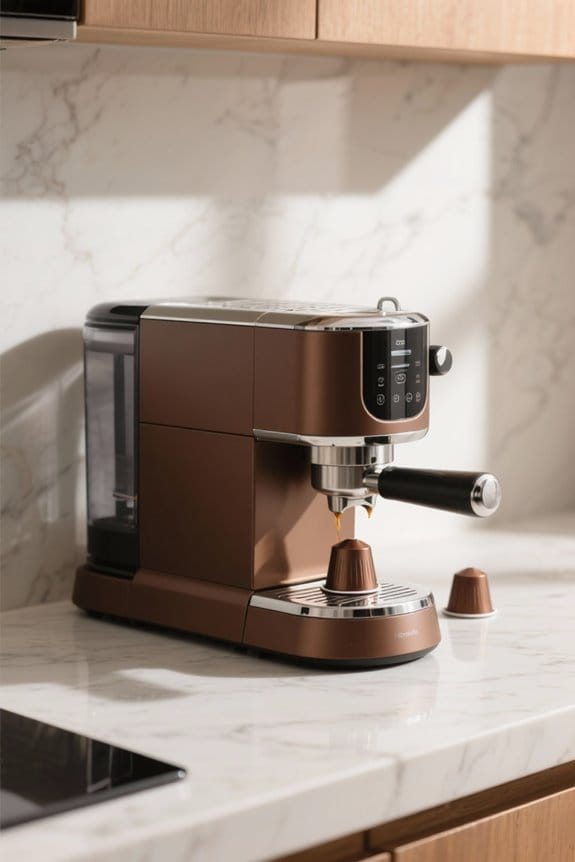
Strange noises during capsule brewing may indicate issues like air pockets, scale buildup, or pump malfunctions. Humming suggests low water levels, while gurgling may point to trapped air, indicating poor flow. Scale buildup from hard water leads to increased noise and can affect heating elements, resulting in rattling. Regular maintenance, including descaling every three to six months and inspecting water lines, is essential. Knowing these signs can help improve performance, and further insights await to enhance your brewing experience.
Key Takeaways
- Humming sounds may indicate improper water tank positioning or low water levels affecting capsule brewing noise.
- Air pockets in the water system can create irregular gurgling or humming noises during brewing cycles.
- Scale buildup in the machine can cause loud operational noises; regular descaling is essential for minimizing this issue.
- Blockages or malfunctions in the pump may lead to loud buzzing or sputtering noises, signaling a need for inspection.
- Regular maintenance, including cleaning and replacing filters, enhances machine performance and reduces unexpected brewing noises.
Common Causes of Strange Noises
You may be interested


Strange noises during capsule brewing can stem from various issues within the machine. Humming sounds often indicate that the water tank is either improperly positioned or low on water, requiring proper water levels for efficient operation. Additionally, using incompatible capsules may alter normal sound levels, stressing the importance of choosing the correct brand, such as LOR capsules. Frequent loud noises or buzzing can signify a blockage or malfunction in the pump, which may require inspection and potentially professional assistance. To prevent excessive strange noises, regular maintenance including descaling and cleaning is vital. This upkeep reduces mineral buildup and guarantees smooth brewing, maintaining a harmonious coffee experience without disruptive sounds. Recognizing these issues can enhance machine performance and longevity. Moreover, utilizing heat-resistant borosilicate glass can contribute to a more enjoyable coffee-drinking experience by ensuring proper temperature retention.
Understanding Air Pockets and Water Flow
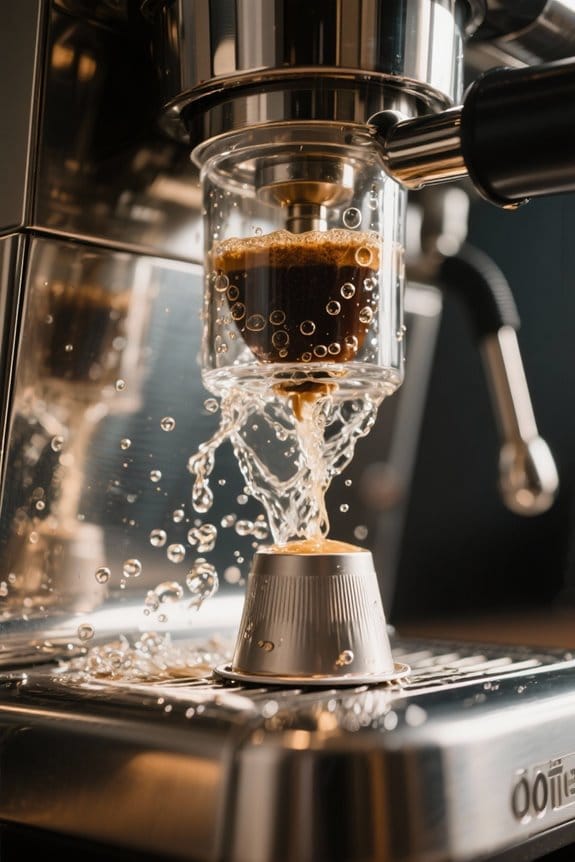
Irregular noises during capsule brewing often signal underlying issues, including the presence of air pockets within the water flow system. Trapped air can create disruptive sounds like humming or gurgling, indicating that the water is not flowing smoothly. To mitigate this, it is important to guarantee that the water tank is filled to the maximum fill line, preventing air from being sucked into the tubes. Additionally, running a few cycles with only water can dislodge trapped air, enhancing overall water flow. Inspecting the water line for obstructions, such as clogged filters or tubes, is essential, as these can exacerbate air pocket issues. Regular maintenance, including descaling solutions, is necessary to keep the machine’s components clear and fully functional.
Scale Buildup Impact on Noise Levels
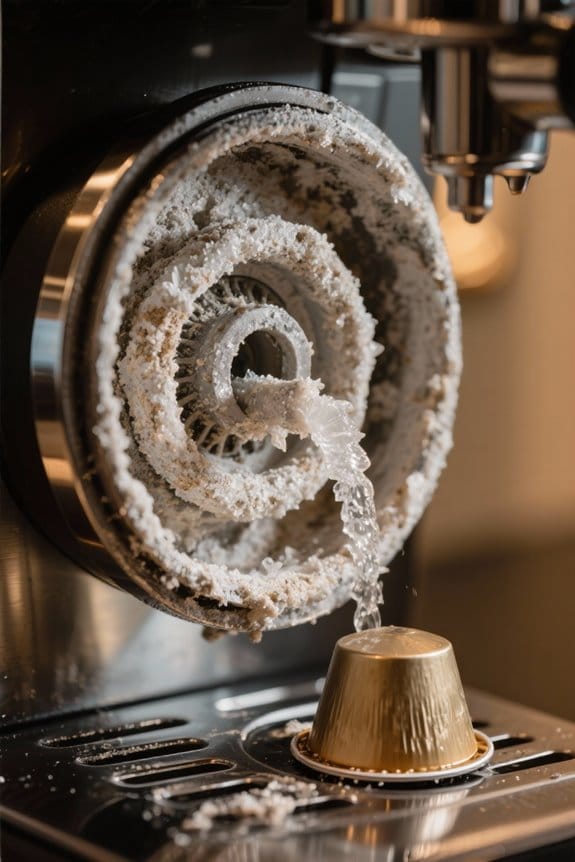
When scale buildup accumulates in capsule brewing machines, it can lead to noticeable increases in noise levels during operation. This buildup is often caused by mineral deposits from hard water, which can impede water flow. As a result, the machine must exert more force to push water through affected components, accentuating sounds during brewing. The presence of limescale on the heating element can generate rattling noises as the water heats unevenly due to blockages. Additionally, clogged water passages can result in disruptive gurgling or sputtering sounds. Regular descaling with suitable solutions, such as vinegar, is essential to mitigate scale buildup, enhance operational efficiency, and markedly reduce noise levels, leading to a more enjoyable coffee brewing experience. Implementing a routine maintenance schedule every 3 to 6 months is crucial to ensure the longevity and performance of your coffee maker.
Recommended Products


Certified NSF/ANSI 60

Pack of 5 bottles : 14 Ounce Keurig Descaling Solution
Diagnosing Pump and Grinder Issues
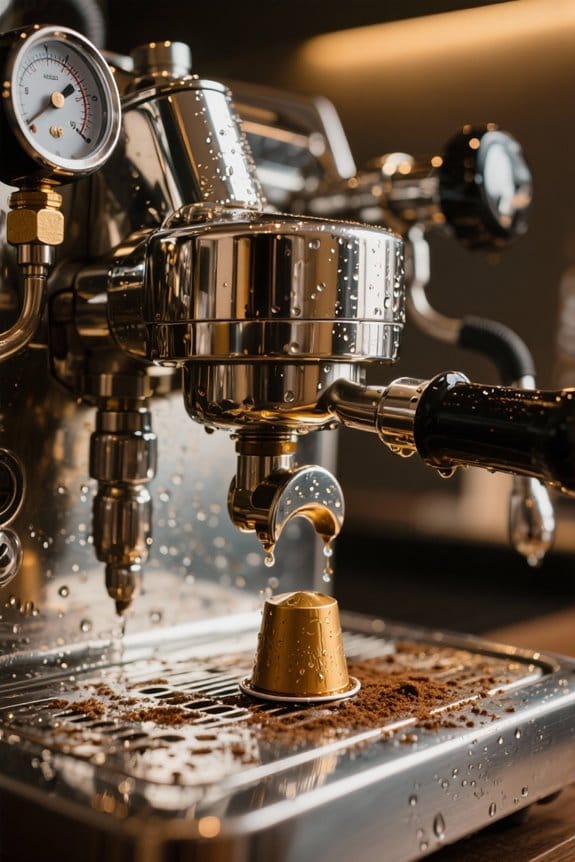
Diagnosing pump and grinder issues in capsule brewing machines requires careful attention to the sounds emanating from these components. A loud buzzing noise may signal a blockage in the pump or grinder, directly affecting water flow and coffee extraction quality. Grinding noises often indicate worn-out burrs or a malfunctioning motor, which can lead to inconsistent grind size and potential breakdown. Insufficient pressure from the pump produces sputtering or gurgling sounds, suggesting trapped air in the system or low water levels in the reservoir. Inspecting the brew unit and internal parts for wear, misalignment, or blockages is crucial. By identifying these issues, users can guarantee ideal performance and maintain the machine’s efficiency during the brewing process. Additionally, ensuring compatibility with various filter options can enhance the overall brewing experience and prevent related issues.
Recommended Products

KEURIG DEEP CLEAN: Keep your coffee pure & flavorful with Caffenu's 3-Month Brewer Maintenance Kit. It includes descaling solution, 3 cleaning pods & 2 water filters for...
The Importance of Regular Maintenance
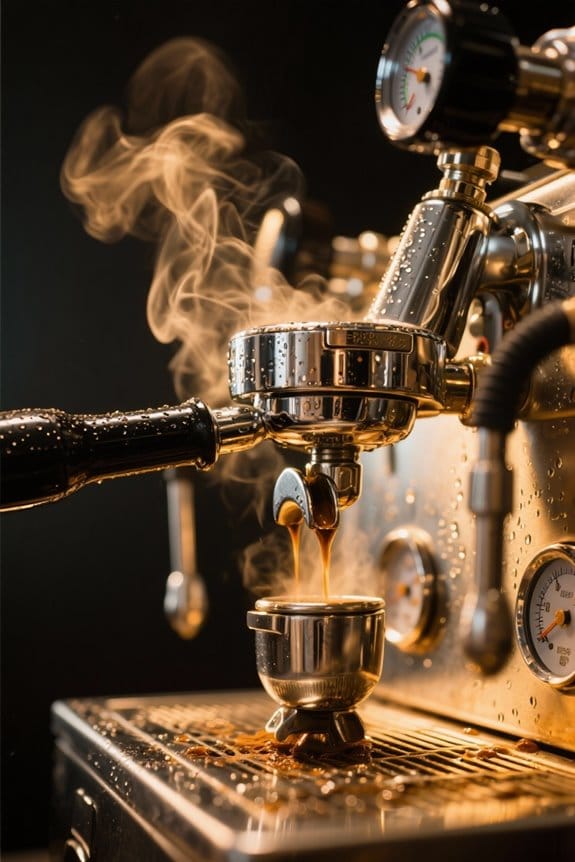
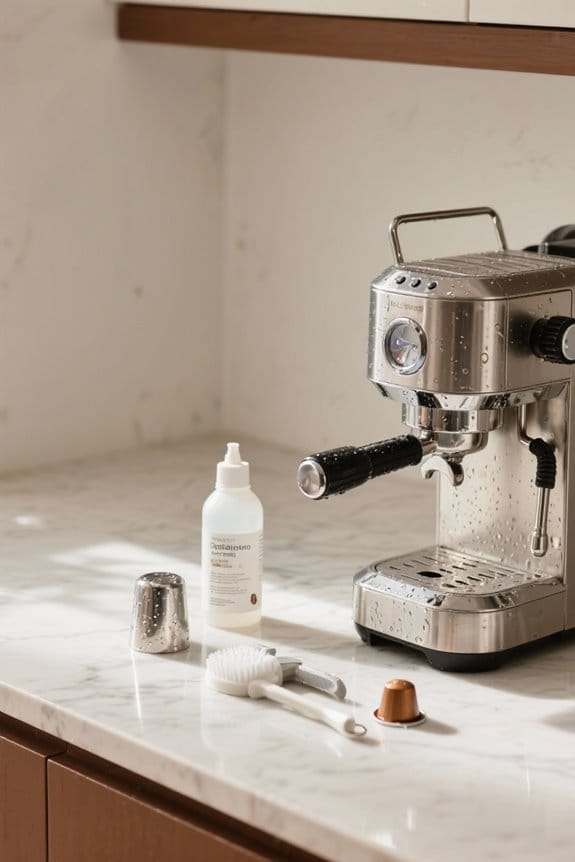
Regular maintenance is essential for optimizing the performance of capsule brewing machines. Descaling every three to six months prevents mineral buildup in the water tank, reducing unexpected noises. Cleaning the water reservoir before each use is vital, as it minimizes air entrapment, which can lead to gurgling or sputtering sounds during brewing. In addition, inspecting and replacing filters roughly every six months maintains unobstructed water flow, lessening the risk of clogs that can create operational noise. Moreover, lubricating moving parts in the brew unit with food-grade silicone grease helps prevent squeaking, ensuring quiet functionality. Routine checks for loose components can mitigate rattling noises, promoting a peaceful and efficient brewing experience. Additionally, high-pressure pumps are crucial for ensuring optimal brewing conditions and minimizing noise during operation.
Recommended Products

A water repellant, non-melting, dielectric grease lubricant

PROTECTS AND LUBRICATES FOR EXCELLENT PERFORMANCE BETWEEN -40°C AND 150°C - water-resistant disinfectants and cleaning agents, this long-lasting food grade gear grease keeps parts moving smoothly to reduce wear and damage

Superior Lubrication Performance: Super Lube Silicone Lubricating Grease with Syncolon reduces friction and wear while providing long-lasting lubrication for industrial and automotive applications
Recognizing Loose Parts and Their Effects
The integrity of a coffee machine hinges on the stability of its parts, as loose components can greatly affect performance. Loose parts within the machine can lead to increased vibrations and unusual noises during operation. For instance, over time, screws and panels may become unfastened due to regular usage, resulting in rattling sounds that deviate from normal noises. Regular inspections for loose parts are imperative; users can unplug the device and visually check for any noticeable changes. Addressing these loose components promptly enhances the machine’s performance, ensuring safety and efficiency while markedly extending its lifespan. By preventing potential damage from vibrations or misalignment, users can maintain peak function and enjoy consistently high-quality brewing results. Additionally, ensuring that all components are secure can help prevent the durability and material degradation associated with frequent use.
Identifying Warning Signs of Wear
Monitoring for signs of wear in a coffee machine’s brewing mechanism can be pivotal for maintaining its efficiency. Regular observation of unusual noises, such as grinding or sputtering, serves as an essential alert system. A buzzing noise often suggests mechanical wear or strain on the pump, emphasizing the need for immediate attention. Additionally, vibrations or rattling sounds may indicate loose components requiring tightening to prevent further damage. Squeaky or sticky brew levers can highlight lubrication needs, as a lack of maintenance accelerates wear. By detecting abnormal noises early—evident from a clogged filter or pump malfunction—users can avert costly repairs and guarantee the smooth operation of the coffee machine, consequently prolonging its lifespan and enhancing performance. Regular cleaning of reusable K-Cups is also important to prevent clogs that may contribute to brewing noise issues.
Steps to Troubleshoot Your Coffee Machine
Troubleshooting a coffee machine begins with a thorough inspection of its water tank. Confirm it is securely positioned and filled with fresh water, as low levels can lead to unusual brewing noises. Listen for abnormal grinding or buzzing, which may indicate issues with the coffee grinder or internal pump, necessitating inspection and cleaning. Regular inspection and cleaning of filters and coffee delivery spouts are essential; clogged components can cause inefficiencies and strange sounds. Additionally, running a few cycles with just water helps eliminate trapped air, reducing gurgling noises. If persistent loud noises occur, consider descaling the machine. Mineral buildup can disrupt operations, affecting overall performance and sound levels, indicating potential internal issues. Regular descaling is crucial for maintaining appliance efficiency, ensuring your coffee machine operates smoothly.
Recommended Products

Each of the 2 containers contains 25 cleaning tablets each

Descaling Cartridge: A gentle formula that is kind to machines while thoroughly removing limescale and deposits from your appliances - providing optimal care for your coffee machine

This automatic descaling cartridge is used in conjunction with the Automatic Descale function on select Miele coffee machines
When to Seek Professional Help
Persistent strange noises during capsule brewing may indicate the need for professional intervention, particularly when routine maintenance tasks like descaling and cleaning have been performed without resolving the issue. Unusual sounds, such as loud buzzing or rattling, often signify deeper mechanical problems, like pump or grinding mechanism malfunctions. Professionals possess the expertise to accurately diagnose these issues. Additionally, if noises correlate with specific error codes or warning indicators on the machine, seeking expert help is vital to avert further damage. For those attempting DIY repairs without improvement, consulting a technician is advisable to guarantee safe and effective resolutions. Regular monitoring of machine sounds aids in early problem detection, making it important to act promptly if notable changes occur in noise levels. Regular descaling every 1-3 months can help prevent these issues from arising in the first place.
Maintaining Optimal Performance to Prevent Noises
Maintaining ideal performance in a capsule brewing machine is essential for ensuring a high-quality coffee experience and minimizing undesirable noises during operation. Regularly inspect and clean the machine, particularly by descaling every three to six months. This prevents limescale buildup, which can heighten brewing noise. Monitoring water levels in the reservoir helps avoid air traps, thereby reducing gurgling sounds. Additionally, cleaning or replacing filters biannually prevents clogs that disrupt water flow, leading to irregular sounds. Ensuring all components, including the water tank and brew unit, are securely assembled and free of obstructions enhances efficiency. Finally, checking and lubricating moving parts with food-grade silicone grease fosters smooth operation, effectively decreasing noise levels during brewing. Embracing manual espresso machines can provide additional insights into how proper maintenance influences brewing performance.
Recommended Products

HEAVY-DUTY FOOD GRADE LUBE - Taylor blue lube keeps soft serve ice cream machines, frozen yogurt machines, and slushie machines running smoothly with NSF H1 food-safe lubricant that protects O-rings, gaskets, and seals from wear and tear, ideal for commercial kitchens and food service equipment.
![Sta-Lube Synthetic Food Grade Grease SL35610 - [Pack of 10] 14 Wt Oz., Synthetic Grease for Food Plant Machineries, Clear Colorless](https://m.media-amazon.com/images/I/41rGPHgX-FL._SL500_.jpg)
STA-LUBE: Sta-Lube offers a range of high performance greases, gear oils, service oils, fluids, hand cleaners, additives, and lubrication formulas. Highly efficient products have been rigorously tested to meet the highest quality standards.

The Breville Smoking Pro Gun smoker is a robust kitchen tool designed for professionals and commercial kitchens
Frequently Asked Questions
Why Is My Nespresso Machine Making a Weird Noise?
The Nespresso machine’s weird noise may indicate air trapped in the water system or low water levels. Noise troubleshooting involves checking for blockages, capsule compatibility, and ensuring regular maintenance to prevent further disruptions during brewing.
Why Does My Nespresso Make a Gurgling Sound?
A user once noticed their Nespresso gurgling intermittently. This noise often signifies air trapped in the water line; effective gurgling remedies include refilling the reservoir and running cycles with water to eliminate the issue.
Why Is My Espresso Machine Making a Weird Sound?
The espresso machine’s weird sound often results from steam pressure fluctuations. This could indicate air trapped in the water line, a blockage, or loose components, requiring inspection and potential adjustments to restore normal operation.
Why Is My Keurig Making Weird Noises?
A Keurig making weird noises may indicate air in the water line, low reservoir levels, or clogged filters. Regular Keurig maintenance, including cleaning and ensuring proper water levels, can help resolve such issues effectively.