As an Amazon Associate, we earn from qualifying purchases. Some links on this site are affiliate links at no extra cost to you. Our recommendations are based on thorough research and editorial judgment.

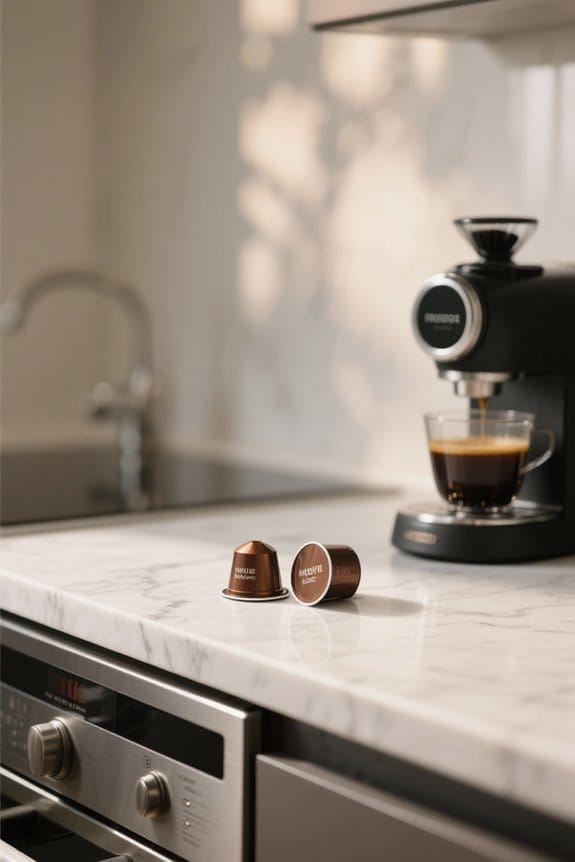
The Role of Nitrogen Sealing in Keeping Pods Fresh

Nitrogen sealing plays a crucial role in maintaining the freshness of coffee pods by displacing oxygen, which minimizes oxidation. This process allows sealed pods to retain ideal flavor and aroma for 6-12 months. By reducing oxygen levels to below 1%, nitrogen flushing also decreases contamination risks from bacteria and molds, ensuring quality until brewing. Proper storage conditions, such as keeping pods in cool, dry, dark places, further enhance their longevity. Continued exploration reveals additional insights about nitrogen’s impact on coffee preservation.
Key Takeaways
- Nitrogen sealing replaces oxygen in coffee pods, preventing oxidation and preserving freshness for 6-12 months.
- By maintaining oxygen levels below 1%, nitrogen sealing minimizes contamination risks from bacteria and molds.
- The process keeps delicate coffee beans intact, unlike vacuum sealing, which can crush them.
- Nitrogen flushing does not alter coffee flavor, providing a neutral preservation method compared to CO₂ flushing.
- Properly sealed nitrogen-flushed pods can typically be stored in a cool, dry, dark place for optimal freshness.
Importance of Freshness in Coffee Pods
You may be interested



Freshness plays an essential role in the quality of coffee pods, greatly influencing flavor and aroma. Coffee pods, carefully sealed to keep out oxygen, can maintain their freshness much longer than traditional ground coffee. Exposure to oxygen can lead to oxidation, reducing the coffee’s complexity and aroma over time. Properly nitrogen-flushed pods boast a shelf life of approximately 6-12 months, thereby extending flavor preservation considerably. Once the nitrogen-sealed bag is opened, it’s advisable to consume the coffee within 7-10 days for peak taste. Additionally, storing these pods in a cool, dry, and dark place further enhances their freshness, minimizing flavor degradation and offering a convenient solution for high-quality coffee enjoyment. Many coffee enthusiasts appreciate eco-friendly options that ensure sustainability while enjoying their fresh brews.
What Is Nitrogen Flushing?

Nitrogen flushing is a packaging technique designed to enhance the longevity and quality of coffee products, specifically by replacing oxygen within the packaging. This method effectively reduces oxygen levels to near zero, markedly diminishing oxidation, which can lead to staleness and flavor loss. The packaging process involves injecting nitrogen gas into coffee bags or capsules before sealing them hermetically. This prevents oxygen re-entry and allows the coffee to maintain its fresh aroma and taste. As a result, nitrogen flushing can extend the shelf life of coffee capsules from 6 to 12 months. By preserving the flavor profile, this technique guarantees consumers experience coffee as if it was just roasted, maintaining its natural characteristics and freshness throughout its intended use. Additionally, this preservation method aligns with Nespresso’s commitment to sustainability practices, ensuring that coffee lovers can enjoy their brews while being conscious of the environment.
Benefits of Nitrogen Sealing for Coffee Preservation

When coffee pods are sealed with nitrogen, they gain significant advantages regarding preservation. This process effectively displaces oxygen inside the pods, vital for keeping coffee fresh. With nitrogen gas, the oxygen levels are kept below 1%, which minimizes oxidation and maintains coffee freshness. As a result, nitrogen-sealed pods can achieve an extended shelf life of 6-12 months, far exceeding non-nitrogen-sealed alternatives. This hermetic sealing not only enhances the coffee’s flavor and aroma but also reduces contamination risks from bacteria and molds, guaranteeing a safer product for consumers. Additionally, this preservation method assures that coffee remains fresh until brewed, making it a highly convenient choice for coffee lovers who prioritize quality. Notably, Nespresso Original pods are designed with fully recyclable aluminum to further enhance sustainability while preserving freshness.
Recommended Products

Julius Meinl. Inspiriert Poeten seit 1862. Inspiring poets since 1862.

ENERGY & FOCUS: This infusion of MCT oil, cinnamon, and turmeric is the secret weapon of the bold and brainy! This next-level trio packs a serious punch with properties that boost energy and focus.

Creamy Cold Brew Coffee Without the Cream - Get the velvety smooth creamy texture of dairy without the dairy by infusing coffee with nitrogen gas using NITRO KAFO Nitro Cold Brew Maker and standard N2 cartridges (30 INCLUDED). The micro bubbles from the nitrogen give your coffee a sweet flavor without sugar and frothy, cascading, velvety crema without the calories! Start making your own Nitro Coffee at home!
The Nitrogen Flushing Process Explained

The process of nitrogen flushing plays an essential role in preserving the quality of coffee. Initially, freshly roasted coffee is placed into food-grade bags, where nitrogen gas is injected to displace oxygen. This step reduces oxygen levels to nearly zero, minimizing oxidation that can degrade flavor and aroma. Immediately after nitrogen injection, the bags are sealed using specialized equipment to prevent air infiltration. These packages also feature one-way valves, allowing carbon dioxide from the coffee to escape while keeping oxygen out. This nitrogen-rich packaging effectively extends the shelf life of coffee pods to 6-12 months, ensuring consumers enjoy fresh coffee as if it were just roasted. The nitrogen flushing process is vital for maintaining optimum freshness in coffee products, as it helps prevent limescale buildup that can affect flavor quality in brewing machines.
Recommended Products

Our Roastmaster meticulously crafts each coffee in our Artisan Blend collection to enhance the flavors of the different coffees. We blend a little of this coffee and a little of that coffee (no additional flavorings!) in order to make a new and delicious coffee experience

Fresh Roasted Coffee roasts on Loring SmartRoasters which provide superior flavor, use less fuel, and produce fewer emissions than traditional roasters. Rising in 2024, our advanced solar array will help us become one of the cleanest commercial roasters in the country.

Organic Bali Blue Moon is overwhelmingly Rich with Syrupy Dark Chocolate Notes, A Creamy Mouthfeel and a Spicy Finish.
Comparison With Other Preservation Methods

While various preservation methods exist, nitrogen flushing stands out for its effectiveness in coffee freshness preservation. Unlike vacuum sealing, which can crush delicate coffee beans, nitrogen flushing maintains the integrity of the beans while removing oxygen. CO₂ flushing, while removing oxygen, can alter coffee’s flavor if mishandled, but nitrogen remains neutral, ensuring a fresh taste. Refrigeration and freezing might extend shelf life, but they can also change flavor profiles without proper management. Single-serve pods utilize tight seals to avoid oxygen and moisture exposure, akin to nitrogen flushing, while allowing convenient preparation. Research shows that nitrogen flushing can extend shelf life by 6-12 months, markedly reducing contamination risks and preserving the aroma and taste integrity of coffee compared to traditional methods. Additionally, the use of portion control containers in meal prep can further enhance food freshness and organization, similar to how nitrogen sealing protects coffee.
Recommended Products

Fresh Roasted Coffee roasts on Loring SmartRoasters which provide superior flavor, use less fuel, and produce fewer emissions than traditional roasters. Rising in 2024, our advanced solar array will help us become one of the cleanest commercial roasters in the country.

This Guatemalan coffee offers the best of both worlds - A mild body that doesn't overwhelm the palate, and a beautiful depth of flavor untouched by many other coffee growing regions.

Start with a perfectly roasted coffee. Add rich, chocolatey mocha. Multiply flavor with sweet salted caramel. The answer is always Salted Caramel Mocha flavored coffee.
Drawbacks and Considerations of Nitrogen Flushing
Although nitrogen flushing offers significant benefits for maintaining coffee freshness, several drawbacks and considerations must be acknowledged. The initial costs of nitrogen flushing equipment can be high, creating a barrier for smaller operations in the food packaging industry. Regular maintenance is crucial to guarantee consistent performance and safety, complicating operations for commercial users. Additionally, while nitrogen flushing may sound effective, the subtle improvements in taste might not be noticeable to consumers, reducing its perceived value. Finally, the safety risks associated with nitrogen, being odorless and colorless, can present challenges, especially regarding leak detection in production environments. Furthermore, innovations in preservation techniques, such as advanced packaging films, indicate nitrogen alone may not suffice for ideal freshness. Airtight coffee containers also play a vital role in prolonging the quality of coffee by preventing oxidation and protecting against air, moisture, and odors.
Equipment and Techniques Used in Nitrogen Flushing
Implementing effective nitrogen flushing requires specialized equipment and techniques designed to maximize the preservation of coffee pods. The nitrogen flushing process uses gas-flush technology, injecting nitrogen gas into packaging to replace oxygen. This technique greatly lowers oxygen levels in sealed coffee pod packages to below 1%, which reduces oxidation risks and helps maintain freshness for 6-12 months. Equipment such as the Q800CG Bag Sealing Machine can seal up to 800 bags per minute while guaranteeing a nitrogen atmosphere. Additionally, one-way valves allow carbon dioxide to escape without letting oxygen enter, further enhancing the quality of the coffee pods. Using protective coatings on beans and advanced packaging films alongside nitrogen flushing guarantees ideal preservation during transport and storage. This method aligns with the principles of sustainable brewing options, ensuring that consumers can enjoy high-quality coffee while minimizing waste.
Industry Perspectives on Nitrogen Sealing
Nitrogen sealing technology has garnered substantial recognition within the coffee industry for its role in prolonging the shelf life of coffee pods. This method considerably extends freshness for 6 to 12 months compared to conventional packaging. By utilizing nitrogen flushing, oxygen levels are effectively reduced, minimizing coffee staleness and preserving essential flavors and aromas. Industry experts endorse hermetic sealing for nitrogen-flushed pods, ensuring oxygen levels remain below 1%, thereby maintaining quality until brewing. Additionally, nitrogen sealing protects against bacteria and mold, enhancing product integrity during storage and transportation. Many nitrogen-flushed capsules are commercially compostable, supporting sustainability efforts while delivering a superior coffee experience. Overall, nitrogen sealing represents a vital advancement in coffee pod preservation. Furthermore, the environmental impact of single-use products is a critical consideration as consumers increasingly seek sustainable options.
Common Applications of Nitrogen Flushing in Coffee
In the domain of coffee packaging, nitrogen flushing serves an essential function by displacing oxygen, which is known to accelerate oxidation. This method is employed to enhance the shelf life of coffee pods considerably. By injecting nitrogen gas into the packaging before sealing, manufacturers can keep oxygen levels below 1%. This hermetic sealing technique allows the coffee capsules to maintain their freshness for 6-12 months, nearly doubling their shelf life compared to traditional packaging methods. Furthermore, this preservation guarantees that the complex flavors and aromas of the coffee are retained. Consumers benefit from a fresher tasting experience when brewing these nitrogen-flushed coffee pods, highlighting the importance of packaging innovations in the coffee industry. Additionally, the use of fully recyclable aluminum for pod construction further supports sustainability efforts while preserving coffee quality.
Best Practices for Storing Nitrogen-Flushed Pods
Storing nitrogen-flushed pods correctly is integral to preserving their freshness and flavor. It is recommended to keep these pods in a cool, dry, and dark place for ideal preservation, ideally maintaining the environment for 6-12 months. Once opened, consumers should aim to use the pods within 7-10 days to enjoy the best taste experience. To further enhance freshness, storing pods upright can prevent crushing and protect the integrity of their seals. Exposure to light and moisture should be avoided, as these elements can compromise the nitrogen environment and lead to quality deterioration. Finally, keeping the pods sealed in their original packaging until ready to brew minimizes oxygen exposure, maximizing the freshness of the coffee inside. Additionally, using energy-efficient models can help maintain a consistent brewing temperature, which contributes to the overall flavor quality.
Frequently Asked Questions
How Does Nitrogen Keep Food Fresh in Packaging?
In the age of alchemy, nitrogen composition revolutionizes packaging technology by enhancing freshness retention. It prevents spoilage, guarantees food safety, and provides remarkable shelf stability, safeguarding culinary delights from degradation and extending their life considerably.
How Does Using Nitrogen Help Prevent the Spoilage of Grains?
Using nitrogen helps prevent the spoilage of grains through oxidation reduction and moisture control, enhancing grain preservation. This process supports storage longevity, considerably reducing nitrogen absorption, and ultimately maintaining quality over extended periods.
Does Nitrogen Extend Shelf Life?
Doesn’t everyone desire longer shelf life for their products? Utilizing nitrogen properties in packaging technology greatly enhances product quality, ensuring food safety and extending shelf life when ideal storage conditions are maintained.
What Are the Benefits of Nitrogen Packing?
Nitrogen packing offers numerous advantages, including enhanced packaging safety and freshness retention. It provides shelf stability, considerably prolonging product life while ensuring food preservation and quality assurance without harmful additives, making it an effective preservation method.