As an Amazon Associate, we earn from qualifying purchases. Some links on this site are affiliate links at no extra cost to you. Our recommendations are based on thorough research and editorial judgment.


Arabica vs. Robusta in Coffee Capsules: Key Differences

Arabica and Robusta coffee capsules differ considerably in flavor, caffeine content, and price. Arabica, with a caffeine range of 1.2% to 1.5%, is known for its sweet and fruity flavors, while Robusta, containing 2.2% to 2.7% caffeine, has bold and bitter notes. Arabica capsules are pricier, often 50% more, due to labor-intensive harvesting, in contrast to the more economically accessible Robusta. Brewing methods also vary, affecting taste outcomes. Further insights on their unique characteristics await.
Key Takeaways
- Arabica coffee, with its sweet and fruity flavors, is preferred by 56% of coffee drinkers, while Robusta’s bitter taste has a 25% preference.
- Arabica capsules typically cost 50% more due to labor-intensive cultivation and superior flavor profile compared to Robusta capsules.
- Arabica beans contain 1.2% to 1.5% caffeine, leading to a milder taste, while Robusta has 2.2% to 2.7% for a stronger kick.
- Robusta capsules are easier to cultivate and can be mechanically harvested, resulting in lower prices and more consistent supply.
- Brewing methods differ: Arabica is best at 190°F for 30-40 seconds, whereas Robusta requires 200°F for about 25 seconds.
Overview of Arabica and Robusta Coffee
You may be interested


When comparing Arabica and Robusta coffee, it is essential to understand their distinct characteristics and cultivation requirements. Arabica coffee, derived from the Coffea Arabica plant, represents approximately 70% of global production. It is well-regarded for its sweet, fruity flavors and complex aroma. In contrast, Robusta coffee, originating from the Coffea canephora plant, accounts for about 30% of production. It is characterized by deep, bitter flavors and contains nearly double the caffeine content, reaching up to 2.7%. Arabica beans thrive at higher elevations, requiring cooler, subtropical climates, while Robusta is more resilient, flourishing at lower elevations and in diverse environments. Additionally, Arabica beans are oval and flat, while Robusta beans exhibit a round, stout shape, making identification easier. The flavor profiles of organic coffee pods can vary significantly depending on whether they are made from Arabica or Robusta beans, impacting the overall tasting experience.
Flavor Profile Differences

The flavor profiles of Arabica and Robusta coffee highlight their unique characteristics and appeal. Arabica coffee beans are known for their nuanced and aromatic flavor, often showcasing sweet and fruity notes. This complexity makes Arabica the preferred choice for high-quality coffee capsules. In contrast, Robusta coffee beans deliver a bold, earthy, and bitter flavor, complemented by nutty undertones. This makes Robusta suitable for instant coffee products and darker roasts in capsules. The processing methods also influence flavor profiles: Arabica typically uses washed processing, while Robusta often employs natural processing. With Arabica containing up to 60% more sugars than Robusta, it provides a smoother mouthfeel, inviting consumers who favor sweetness in their coffee experience. Additionally, sugar-free syrups can enhance the overall coffee experience by adding sweetness without additional calories.
Recommended Products

Delicious Flavored Coffee Pods: White Chocolate Strawberry Coffee Meets Dessert with this delicate white truffle with sweet strawberry filling tucked inside. White Chocolate Strawberry perfectly balances the flavor of fresh strawberries with creamy, sweet white chocolate. Enjoy this gourmet blend knowing that our flavorings add 0 calories – you won’t want to miss out on this delectable delight! This coffee is delicious both iced and hot and makes a great dessert coffee.

Delicious Flavored Coffee Pods: Vanilla Macadamia Nut flavored coffee pods are one of our classics. This coffee is the perfect blend of nuts and smooth, sweet vanilla. This coffee is delicious both iced and hot and makes a great dessert coffee.

Delicious Flavored Coffee Pods: Vanilla Bean flavored coffee is enriched with the velvety flavor of smooth, rich vanilla beans and cream. Drink alone or mix with other coffees to enjoy a delicious, smooth blend of coffee. This coffee is delicious both iced and hot and makes a great dessert coffee.
Caffeine Content Comparison

Caffeine content plays a significant role in distinguishing Arabica and Robusta coffee capsules, influencing consumer preferences and choices. The Robusta coffee plant contains approximately 2.2% to 2.7% caffeine, almost double the 1.2% to 1.5% found in Arabica beans. This significant difference results in Robusta capsules offering a stronger caffeine kick, appealing to consumers seeking a more robust coffee experience. Conversely, the lower caffeine content in Arabica lends itself to a smoother, sweeter flavor, attracting those who prefer milder options. Additionally, the increased caffeine in Robusta not only enhances flavor but also contributes to greater pest resistance in its cultivation, which can influence bean selection in coffee capsules. Hence, caffeine content is a critical factor for many coffee enthusiasts. Moreover, brewing efficiency in different coffee makers can also affect how caffeine is extracted during the brewing process, further impacting the overall experience.
Recommended Products

SUPER CREMA: A 2.2 lb whole bean coffee bag ideal for espresso preparation.

DOLCEVITA CLASSICO: 96 single-serve pods made for your Keurig coffee maker.

Sugar and Lipid Levels

Differentiating Arabica from Robusta coffee capsules involves examining their sugar and lipid levels, which greatly influence flavor and overall consumer experience. Arabica beans have nearly twice the sugar content of Robusta beans, resulting in a sweeter and more nuanced flavor profile. This higher sugar content enhances its appeal among consumers who favor sweeter coffee. Additionally, Arabica contains approximately 60% more lipid levels than Robusta, contributing to its smoothness and creaminess. Conversely, Robusta’s lower sugar and lipid levels yield a bold, strong flavor profile, often described as harsher and more bitter. These distinct differences in sugar and lipid compositions considerably impact consumer preferences and the formulations of coffee capsules, catering to varying taste preferences. Understanding the material quality and durability of coffee beans can also help consumers make informed choices regarding their coffee experience.
Health Benefits of Both Varieties

While both Arabica and Robusta coffee varieties offer notable health benefits, their unique compositions result in different effects on consumers. Robusta is richer in antioxidants, particularly chlorogenic acid, which may assist in improving metabolic health. This variety’s caffeine content can reach up to 2.7%, providing a significant boost in alertness and energy. In contrast, Arabica contains about 1.5% caffeine, making it suitable for those sensitive to stimulants. Additionally, Robusta’s lower sugar and fat levels, approximately 60% less than Arabica, can appeal to health-conscious individuals. The higher lipid content in Arabica may contribute to its smoother flavor, offering potential health benefits associated with healthy fats. Both types demonstrate promise in reducing the risk of chronic diseases due to their antioxidant properties. Moreover, the flavor profiles of Arabica and Robusta can greatly influence coffee exploration and personal preference in coffee consumption.
Cultivation Methods and Conditions
When considering the cultivation methods and conditions for coffee, Arabica and Robusta exhibit distinct preferences that greatly impact their growth and yield. Arabica plants thrive at elevations above 3,000 feet in subtropical climates, necessitating careful cultivation and manual harvesting due to their delicate nature. In contrast, Robusta coffee is more adaptable, prospering at lower elevations and in diverse climates, which makes its cultivation easier and more cost-effective. Robusta’s resilience allows it to grow in direct sunlight and withstand pests, while Arabica requires shaded conditions to thrive. Arabica represents approximately 70% of global coffee production, needing precise growing conditions, whereas Robusta accounts for 30% and yields higher volumes per plant, influencing market dynamics greatly. Additionally, high-fired ceramics are commonly used in coffee brewing methods to enhance flavor and maintain temperature consistency.
Harvesting Techniques
Harvesting techniques play an essential role in determining the efficiency and cost-effectiveness of coffee production. Arabica coffee, known for its unevenly ripening clusters, necessitates manual harvesting. This labor-intensive method increases costs and requires meticulous management to minimize waste. Conversely, Robusta coffees ripen uniformly, enabling mechanical harvesting. This efficiency reduces labor requirements and lowers overall production costs. The quicker, simultaneous harvest of Robusta results in notably higher volumes per plant. These differences have considerable implications on yield; Robusta’s simplified harvesting allows for improved production efficiency, while the labor-intensive approach for Arabica contributes to a higher market price. Ultimately, effective harvesting techniques directly influence the economic viability of both Arabica and Robusta coffee production. Additionally, the choice of brewing methods can further enhance the flavor profile of the coffee produced from these two varieties.
Market Dynamics and Pricing
Understanding market dynamics and pricing in coffee production reveals significant differences between Arabica and Robusta coffee capsules. Typically, Arabica capsules command higher prices, nearly 50% more than their Robusta counterparts, due to the labor-intensive cultivation and enhanced flavor profile. In contrast, Robusta coffee capsules remain economically accessible, as they are easier to cultivate and yield higher outputs, contributing to their lower market price. Importantly, Robusta prices have shown less fluctuation over the years, while Arabica’s market prices are influenced by factors like weather conditions and specialty coffee demand. The increasing interest in organic and specialty Arabica capsules is driving market investments, reshaping consumer preferences, and gradually elevating prices in this segment. Additionally, the move towards eco-friendly practices in beverage consumption is influencing consumer choices in coffee capsules.
Recommended Products

Compatible with Nespresso Original Machines: Artizan Coffee organic capsules are specifically designed to work seamlessly with Nespresso Original brewers, including Delonghi C190, D290, Citiz, CitiZ & Milk, Maestria, U, Le Cube, Inissia, Lattissima Plus, Lattissima Pro, Lattissima Touch, Lattissima One, Grand Lattissima, Pixie, KitchenAid, Prodigio, Expert, Essenza Mini, Essenza Plus, Creatista Uno, Creatista Plus, and Creatista Pro
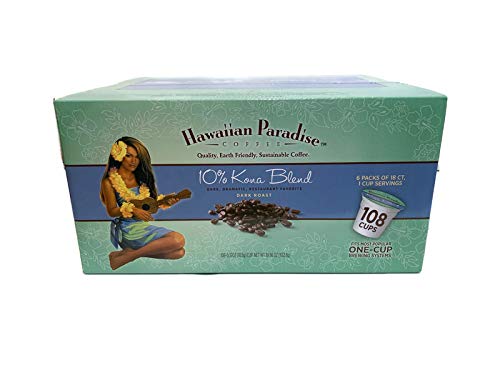
Tremendous value for the money, 108 cups of our 10% Kona Roast. Great for work or at home. One box of 108 loose cups.
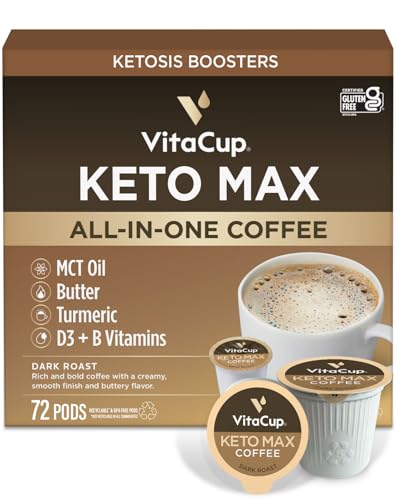
ALL IN ONE KETO: Don’t waste time and money buying individual ingredients to make your keto coffee. KetoMax takes the work out of it for you with butter + coconut MCT oil + vitamins, in a ready to drink formula.
Brewing Methods for Each Type
Brewing methods for coffee capsules vary considerably between Arabica and Robusta due to their distinct characteristics. Robusta coffee capsules often require a higher brewing temperature, reaching around 200°F, which allows for a bolder flavor with a significant caffeine kick. Their shorter extraction time, typically around 25 seconds, guarantees a rich and intense brew. In contrast, Arabica coffee capsules are best brewed at slightly lower temperatures, around 190°F, to preserve their delicate aromas and flavors. The extraction time for Arabica can be longer, usually 30 to 40 seconds, enabling the full development of its nuanced taste. Many coffee brands use a blend of both varieties to create balanced capsules, enhancing the overall flavor profile while catering to diverse preferences. Understanding the grind size recommendations for each type can also significantly impact the brewing results and flavor experience.
Recommended Products

PREMIUM COFFEE IN A K-CUP POD: Starbucks delivers fresh-tasting roasted coffee with these six 10-count boxes of Espresso Roast dark roast coffee K-Cup pods for Keurig coffee makers—60 pods total

Intense 120 Edition - Value Pack of Bold, Dark Roast Espresso Pods: Experience the strength of 3 expertly crafted dark roast blends, each with a bold intensity level from 9 to 12. This premium selection delivers rich crema, deep flavor, and a full-bodied café-style espresso - ideal for those who love a stronger cup.

100% Fairtrade and Organic coffee. Organically cultivated by the Mandailing people of the northern Sumatra. Strength 6/8
Taste Preferences Among Consumers
Taste preferences among consumers often reflect the distinct characteristics of coffee types, particularly Arabica and Robusta. Arabica, representing about 60% of global coffee production, is favored for its smoother and sweeter flavor profile. It features fruity and complex notes, appealing to approximately 56% of coffee drinkers. In contrast, Robusta, known for its bitter and earthy taste, attracts around 25% of consumers seeking a bolder flavor and higher caffeine content. This caffeine level can be nearly double that of Arabica, making Robusta a preferred choice for instant coffee and specific espresso blends. Additionally, quality Robusta can be strategically blended with Arabica, achieving balanced coffee capsules that cater to diverse taste preferences and offering a rich, nuanced drinking experience. These blends can also incorporate user-friendly features that enhance the brewing experience for consumers.
Choosing the Right Coffee Capsule
How can consumers confidently choose the right coffee capsule? When selecting coffee capsules, understanding the differences between Arabica and Robusta is essential. Arabica varieties generally offer a sweeter, more aromatic flavor profile, while Robusta is bolder and more bitter, catering to strong coffee lovers. Price is another factor; Arabica capsules are often more expensive due to their complex flavor and cultivation difficulties, whereas Robusta capsules are usually budget-friendly and yield larger quantities. For those needing an energy boost, Robusta boasts nearly double the caffeine content. Many coffee capsule systems provide blends of both Arabica and Robusta, allowing consumers to balance flavor with strength. Remarkably, the percentage of each in the capsule can greatly influence the overall taste and aroma.
Recommended Products

☕ MEDIUM ROAST – INTENSITY & BALANCE Crafted for a smooth, bold espresso experience with moderate roast intensity and rich body.


Stylish & Space-Saving Coffee Machine – The Lavazza Classy Plus boasts a sleek, compact design that blends seamlessly into kitchens or offices, offering both elegance and functionality.
Frequently Asked Questions
What Is a Key Difference Between Arabica and Robusta Coffee?
A key difference lies in flavor profile and caffeine content. Arabica, with its sweet notes, grows in higher elevations, while Robusta thrives in diverse regions, offering a bitter taste and higher caffeine, making it more robust.
Does Nespresso Use Arabica or Robusta?
Nespresso primarily utilizes Arabica in its coffee blends, particularly in most capsule varieties. However, certain Nespresso flavors incorporate Robusta to enhance strength and crema, catering to diverse consumer preferences for a robust coffee experience.
Does Starbucks Use Arabica or Robusta?
Starbucks exclusively uses Arabica beans for their coffee sourcing, prioritizing superior coffee flavor and aromatic qualities. This focus on high-quality bean varieties reflects their commitment to enhancing the coffee experience for all customers.
Is Lavazza Coffee Robusta or Arabica?
Lavazza coffee blends incorporate both Arabica and Robusta beans, creating diverse Lavazza coffee flavors and varying Lavazza caffeine levels. These beans originate from regions like South America and Africa, enhancing the overall coffee experience for consumers.