As an Amazon Associate, we earn from qualifying purchases. Some links on this site are affiliate links at no extra cost to you. Our recommendations are based on thorough research and editorial judgment.


The Best Practices for Consistent Brewing Results

To achieve consistent brewing results, it is essential to follow best practices. A clear recipe should outline required ingredients and their specifications. Accurate measurements, particularly for hops based on alpha acid content, guarantee balanced bitterness. Proper temperature control maintains ideal fermentation conditions, promoting yeast health. Rigorous sanitation practices prevent unwanted flavors and contamination. Regular sensory evaluations during brewing help identify off-flavors early. Adhering to these principles can greatly enhance the quality and reproducibility of brewed beer, offering further insights into the process.
Key Takeaways
- Use a well-documented recipe with quality ingredients for improved flavor and consistency in brewing results.
- Measure ingredients accurately and source them from the same suppliers to minimize batch variability.
- Implement strict temperature control to ensure optimal fermentation conditions for yeast health and sugar conversion.
- Maintain rigorous sanitation practices to prevent contamination and undesirable off-flavors in the final product.
- Conduct sensory evaluations and monitor beer throughout the brewing process to identify and address any potential off-flavors.
Starting With a Good Recipe

You may be interested



Starting with a good recipe serves as the cornerstone of successful brewing, as it establishes a consistent framework for each batch. A well-crafted recipe provides clarity on required ingredients and their specifications. Quality ingredients, sourced fresh and evaluated before use, greatly enhance flavor profiles. Initially, it is advisable to keep the recipe simple, concentrating on one or two key variables to allow for easier adjustments in future batches. Documenting every brewing session with detailed notes is essential; these should include measurements, timings, and any recipe deviations. This practice facilitates reproducibility and troubleshooting, thereby supporting consistency. Utilizing style guides and referencing successful recipes can inform the design of an effective recipe, aligning brews with established flavor expectations. Additionally, using a scale with high measurement precision ensures accurate ingredient proportions, contributing to consistent results.
Consistent Ingredients and Measurements

Successful brewing relies heavily on the meticulous selection and measurement of ingredients. Consistent ingredients, such as malt, hops, and yeast, play a crucial role in achieving brewing consistency. Utilizing the same suppliers helps minimize variability, paving the way for repeatable results across batches. Meticulous measurement, including accurate hop quantities based on alpha acid percentages, guarantees balanced bitterness and aroma profiles. Additionally, monitoring the pH balance of mash and sparge water is essential for peak fermentation and flavor extraction. Keeping detailed records of ingredient lots allows brewers to track quality variations and address inconsistencies effectively. This all-encompassing approach to ingredient quality ultimately leads to more reliable brewing outcomes. Moreover, advanced features in brewing equipment can further enhance consistency and efficiency in the brewing process.
Recommended Products
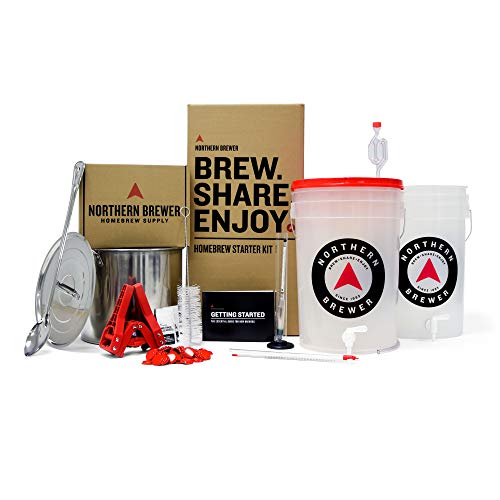
Highest Rated Starter Kit! The Northern Brewer Brew. Share. Enjoy Homebrew Starter Kit is the perfect choice for holiday gifts and beginners, complete with foolproof instructions.

✅ TRULY SPICED! Here's what our Spiced mead kit includes which others don't: 1. Hydrometer Kit (Hydrometer, beaker, brush, baster) for testing gravity and ABV levels (ensuring a finished fermentation). 2. 4 1L Fliptop Bottles for proper mead Storage. 3. 3 STAGES of PREMIUM quality YEAST Nutrients, critical for optimal fermentation.

🍺 CONSISTENT RESULTS - Unlike those expensive 1 gallon grain kits, our 2 gallon recipes take just minutes to prepare and the results are scary-good! Don't be fooled by competitors messy, time consuming kits that use a jug or bucket. Our patented pro-style conical fermenter and easy-to-use recipes, produce a wicked-good result every time you brew.
Importance of Temperature Control

Temperature control stands as one of the most important aspects in the brewing process. Accurate management of temperature guarantees fermentation occurs within the ideal range of 148°F-158°F. This promotes best yeast health and enables effective enzymatic activity, which is essential for sugar conversion. Elevated temperatures can lead to unfermentable sugars that result in sweeter beers, while lower temperatures yield lighter-bodied options. Employing reliable temperature control equipment, such as digital controllers, markedly enhances consistency across batches. Additionally, adjusting boiling temperatures based on equipment and environmental conditions is significant, as it affects evaporation rates and flavor concentration in the final product. Hence, precise temperature control is fundamental for achieving the desired characteristics and quality in brewed beverages. The brewing process can be further optimized by ensuring the right grind size for coffee, which can affect extraction and flavor.
Recommended Products


High-Definition Double-Layer Tempered Glass Door: This 2-door commercial refrigerator features transparent tempered glass doors that provide a clear view of your items while remaining strong and durable. This display refrigerator also blocks UV rays and prevents cold air from escaping. The magnetic self-closing feature ensures the doors automatically shut after customers retrieve beverages, helping maintain energy efficiency.

This Keg Dispenser has Two Tower, Each Tower has 2 Taps and couplers included. It's Overall Dimension is (WxDxH) 60" x 24.4" x 35.6", large capacity comes with 2 half Keg. Certifed by NSF/ETL, you are approved by US Health department to use it in any commercial environment free of worry.
Sanitation Practices for Success

Sanitation practices play a critical role in the brewing process, ensuring that equipment remains free from contaminants that could spoil the final product. Maintaining cleanliness in the brewing setup is crucial, as lapses can introduce unwanted microbes, leading to off-flavors. Regularly cleaning brewing equipment with a brewery-approved sanitizer is essential to prevent batch failures. Significantly, keg cleanliness must also be prioritized; residue can become a breeding ground for bacteria, compromising beer quality. Implementing consistent sanitation practices, such as utilizing no-rinse cleaners between batches, aids in achieving reliable brewing results. Proper sanitation not only preserves the integrity of the brew but also enhances consistency and quality, ultimately contributing to a superior final product in every brew cycle. Regular maintenance, including using coffee machine cleaners, is vital for optimal performance and flavor preservation.
Brewing and Tasting With Purpose

Brewing and tasting with purpose greatly impact the quality and consistency of the final product. Conducting sensory evaluations on ingredients, such as grains, hops, and yeast, before the brewing process is essential for ensuring quality. Accurate measuring of ingredients and maintaining detailed records fosters repeatability in results. Monitoring beer at various stages, from post-wort chill to final product, aids in detecting off-flavors and achieving ideal flavor profiles. In addition, collaborating with experienced judges in tasting sessions enhances the brewer’s ability to identify subtle off-flavors. This systematic approach to batching, flavor assessment, and quality control ultimately leads to improved consistency and overall brewing excellence. Furthermore, using high-quality Arabica beans ensures robust flavors and consistent quality in your brew.
Frequently Asked Questions
What Are the Four Fundamentals of Brewing?
Four key fundamentals of brewing include controlling water temperature, optimizing grind size, balancing brew time and coffee ratio, and ensuring equipment cleanliness. These factors considerably influence extraction efficiency and taste balance in various brewing methods.
What Is the Process of Continuous Brewing?
Continuous brewing involves continuous fermentation within a single vessel, necessitating meticulous yeast management, consistent fermentation temperature, rigorous tank hygiene, and automation. Flavor profiling, batch monitoring, ingredient sourcing, and sensory evaluation ascertain scalability and quality throughout the process.
How to Improve Brewhouse Efficiency?
To improve brewhouse efficiency, optimizing mash temperature, selecting appropriate grains, adjusting water chemistry, managing yeast effectively, and standardizing processes are essential. Additionally, maintaining equipment, managing fermentation time, and ensuring proper hop addition enhance quality control and consistency.
How to Make Consistent Coffee?
To make consistent coffee, one must guarantee ideal coffee grind, precise water temperature, accurate brew time, proper coffee ratio, regular equipment maintenance, good water quality, effective storage techniques, and frequent taste testing for flavor extraction.