As an Amazon Associate, we earn from qualifying purchases. Some links on this site are affiliate links at no extra cost to you. Our recommendations are based on thorough research and editorial judgment.

The Ideal Water Type for Capsule Machines

Filtered water is the ideal choice for capsule coffee machines. It typically maintains a Total Dissolved Solids (TDS) level around 150 ppm, which enhances flavor extraction while preventing mineral buildup. Tap water may contain chlorine and other impurities that compromise taste. Conversely, distilled and reverse osmosis water lack essential minerals, leading to dull coffee. Specialty waters, designed for brewing, offer tailored mineral content for improved flavor. Understanding water quality will elevate the espresso experience greatly.
Key Takeaways
- Filtered water is recommended for capsule machines to maintain optimal flavor and aroma in coffee.
- Ideal Total Dissolved Solids (TDS) level around 150 ppm enhances extraction without bitterness.
- Specialty waters designed for espresso machines offer the perfect mineral balance for better taste.
- Avoid using distilled or reverse osmosis water as they lack essential minerals, affecting flavor and machine performance.
- Regular filter replacements ensure clean water, prolonging machine lifespan and improving the brewing experience.
The Importance of Water Quality for Capsule Machines
You may be interested


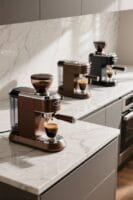
When considering coffee preparation in capsule machines, the quality of water plays an essential role in determining the overall flavor and aroma of the brew. Using filtered water is key, as it effectively removes chlorine and impurities while retaining necessary minerals, therefore ensuring a balanced flavor profile. Ideally, water should have a Total Dissolved Solids (TDS) level around 150 ppm. This range provides adequate minerals to enhance flavor without leading to bitterness or over-extraction. Conversely, hard water can cause significant mineral buildup in capsule machines, ultimately affecting their performance and longevity. Regular maintenance and descaling are vital, as poor water quality may compromise temperature stability and pressure during brewing, leading to an unsatisfactory coffee experience. Additionally, maintaining a consistent temperature control is crucial for optimal extraction, ensuring that every cup of espresso meets your expectations.
Filtered Water: The Best Choice for Capsule Brewing

Filtered water stands out as the perfect choice for brewing coffee in capsule machines, greatly enhancing the overall extraction process. This type of water effectively removes chlorine and impurities while preserving essential minerals, thereby improving coffee flavor. Typically, filtered water maintains a total dissolved solids (TDS) range of around 150 ppm, which best supports capsule brewing. By employing filtered water, users can reduce mineral buildup and scale formation, prolonging the lifespan of their machines and minimizing maintenance needs. Regular filter replacements guarantee that the water remains clean and free from contaminants, further protecting flavor integrity. Ultimately, the use of filtered water contributes to better-tasting coffee and an enhanced brewing experience, making it a smart choice for coffee enthusiasts. Additionally, using certified filters ensures compliance with relevant standards that enhance coffee safety.
Recommended Products
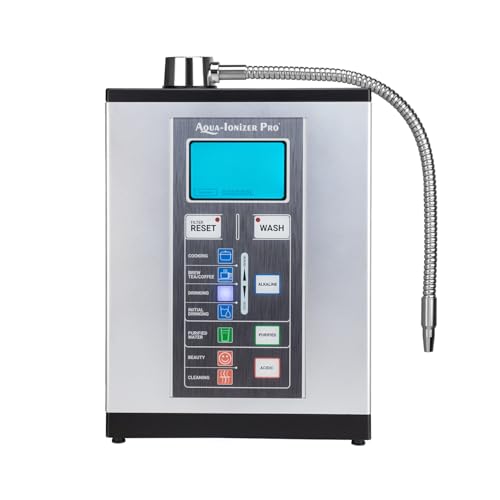
HAPPY, HEALTHY & HYDRATED: Alkaline Water may help detoxify the body, increase energy & hydration

[Trusted certification] Tested and certified by IAPMO R&T against NSF/ANSI 42 & 58 & 372 standard, and tested by SGS to reduce harmful substances
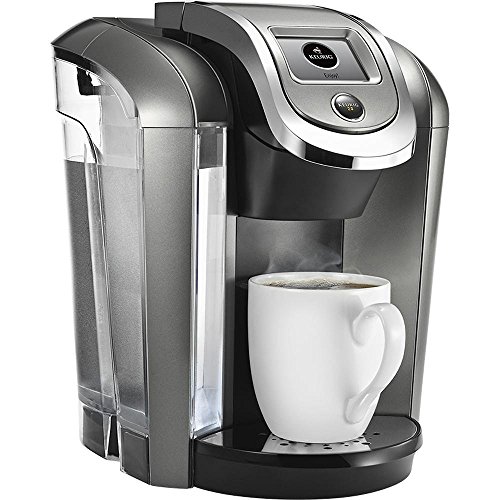
Revolutionary Keurig 2.0 Brewing Technology, Hundreds of varieties from the brands you love
Tap Water: Convenience vs. Quality

Tap water, while readily available and highly convenient for capsule machine users, presents a range of challenges concerning quality that can greatly impact the brewing process. The chemical composition of tap water varies by location, with chlorine and other disinfectants often altering coffee flavor, leading to undesirable outcomes. Hard water typically contains higher mineral content, which may cause mineral deposits to accumulate in machines, potentially affecting functionality and flavor. Conversely, soft water may lack essential minerals, producing a bland taste in brewed coffee. Consequently, while the convenience of tap water is appealing, users must consider its quality to achieve ideal brewing results, ensuring that the chosen water complements the machine’s capabilities and enhances the overall coffee experience. Regular cleaning with commercial cleaners can help mitigate the effects of tap water on your coffee machine.
Recommended Products

✅𝗘𝗙𝗙𝗜𝗖𝗜𝗘𝗡𝗧 𝗪𝗔𝗧𝗘𝗥 𝗦𝗢𝗙𝗧𝗘𝗡𝗜𝗡𝗚: Our WECO UXC-1665 water softener system is designed to prevent mineral scale buildup on sinks, faucets, shower doors, and plumbing fixtures. This compact water softener reduces the need for frequent scrubbing and cleaning, making maintenance easier for residential and commercial spaces.

SECURE YOUR WATER SOURCE: enjoy great-tasting filtered water under any circumstances, at home, off-grid, or during municipal water system failures.

For reliable limescale protection and water with top sensory characteristics.
Distilled and Reverse Osmosis Water: Why to Avoid
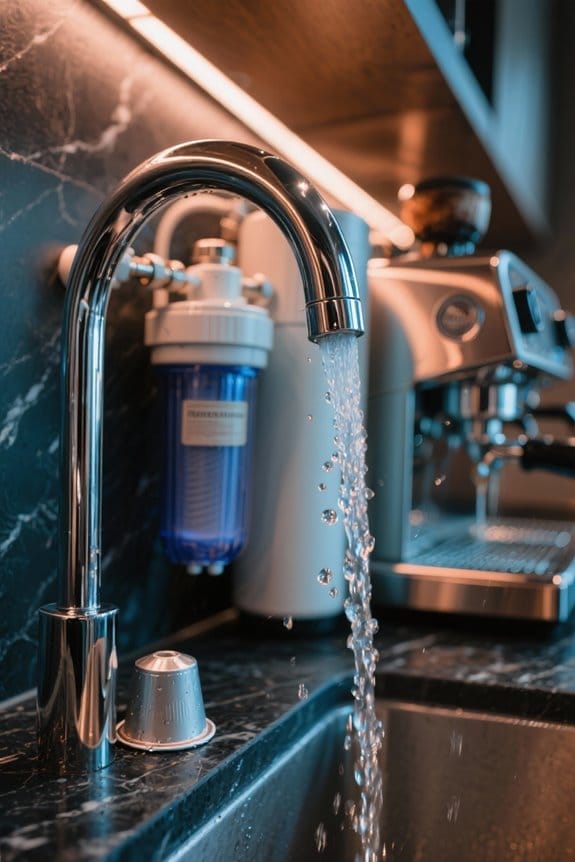
Distilled and reverse osmosis (RO) water presents significant drawbacks that can undermine the quality of coffee brewed in capsule machines. Distilled water lacks essential minerals, leading to overly acidic coffee and a flat flavor. Similarly, RO water’s extreme purity results in low mineral content, negatively impacting espresso flavor and machine performance. Both water types can also cause corrosion in metal components, as their deficiency in minerals disrupts water alkalinity. The absence of bicarbonates in these ultra-pure waters hinders effective water level measurement in espresso machines, increasing risks of malfunctions. Additionally, using distilled or RO water may violate warranty conditions, as many manufacturers recommend filtered or mineral-enhanced water to guarantee peak function and extraction quality. Using high-quality coffee bar mats can help maintain a tidy brewing space, enhancing overall coffee-making experiences.
Recommended Products

Turns pure water into the optimal water for brewing a truly amazing cup of coffee. Perfect for use with reverse osmosis (RO) filtered water or distilled water. Balanced for...
Spring Water: Natural and Flavorful Considerations

When seeking an ideal water source for capsule machines, spring water often emerges as a compelling choice, due to its natural mineral content. Sourced from underground springs, this water type contains beneficial minerals such as calcium and magnesium. These minerals enhance the flavor profile of espresso, providing a richer taste experience. Importantly, the mineral content varies considerably across brands, making it essential to monitor calcium and chloride levels for the best brewing. Additionally, using spring water can help prevent limescale buildup in machines, thereby extending their lifespan. However, consumers should prioritize eco-friendly bottled options to address environmental concerns related to plastic waste. Overall, spring water presents a flavorful, efficient solution for espresso lovers using capsule machines. Choosing the right water type can significantly impact your coffee experience, as mineral content plays a crucial role in flavor enhancement.
Recommended Products

【Upgraded Portable Espresso Maker】 Due to the compact design, our mini coffee maker will become your must-have on the go, espresso made easy! Increase the protection function, when it is detected that there is no water inside, it will perform dry burning safety protection. Insulated design ensures no thermal damage.


COSTARICA : The one-of-a-kind process of fermentation in hot-spring waters brings about a remarkably balanced and clean taste in the cup. Master Origins Costa Rica is full-bodied but mellow. A malty sweet cereal note runs through it with crystal clarity. GRAN LUNGO : 5.07ounce pers cup, 150ml Intensity : 7
Specialty Waters: Tailored Solutions for Better Espresso
What makes specialty waters an advantageous choice for espresso enthusiasts? Specialty waters are formulated specifically for espresso machines, providing an ideal mineral content that enhances flavor profiles while protecting the machinery. These waters contain calibrated minerals such as bicarbonates, calcium, and magnesium in precise proportions, which promote ideal extraction during brewing. This consistent mineral composition guarantees uniform taste across different brews, reducing variability commonly seen with other water types. Furthermore, utilizing specialty waters minimizes mineral buildup, ultimately reducing maintenance frequency and extending equipment lifespan. Although these waters are typically more expensive than standard filtered options, they deliver tailored solutions for serious coffee enthusiasts, guaranteeing a superior espresso experience and retaining the integrity of their brewing equipment over time. Additionally, using burr grinders ensures uniformity in grind size, which further enhances flavor retention in your espresso.
Recommended Products

POLYSHADES WOOD STAIN – Minwax PolyShades is an oil-based wood stain and poly in one. It enhances wood grain by combining beautiful, rich color and long-lasting polyurethane protection in one easy step.

COFFEE WATER mineral packs turn pure water into the optimal water for brewing a truly amazing cup of coffee.
Frequently Asked Questions
Should I Use Distilled Water in My Nespresso Machine?
Using distilled water in a Nespresso machine may benefit maintenance but negatively impacts espresso flavor profile due to low mineral content. Ideal water hardness and quality, achieved through filtration systems, are essential for optimal brewing temperatures and taste.
What Type of Water Should I Use in My Espresso Machine?
Research reveals that water hardness impacts flavor profiles considerably; for espresso machines, filtered water with balanced mineral content, ideal pH levels, and proper temperature guarantees brewing consistency, enhances flavor extraction, and promotes equipment longevity.
What Can I Use Instead of Distilled Water in My CPAP Machine?
For a CPAP machine, suitable replacement water includes filtered water, bottled spring water, or reverse osmosis water. Avoid high mineral content that may cause scaling, and guarantee low chlorine content for better water taste and machine longevity.
What Is the Best Water to Use in a Keurig?
For ideal Keurig water quality, using filtered water enhances flavor while minimizing mineral buildup. Bottled spring water offers beneficial mineral content, while tap water’s safety varies. Regular maintenance guarantees brewing consistency and addresses water hardness concerns effectively.