As an Amazon Associate, we earn from qualifying purchases. Some links on this site are affiliate links at no extra cost to you. Our recommendations are based on thorough research and editorial judgment.

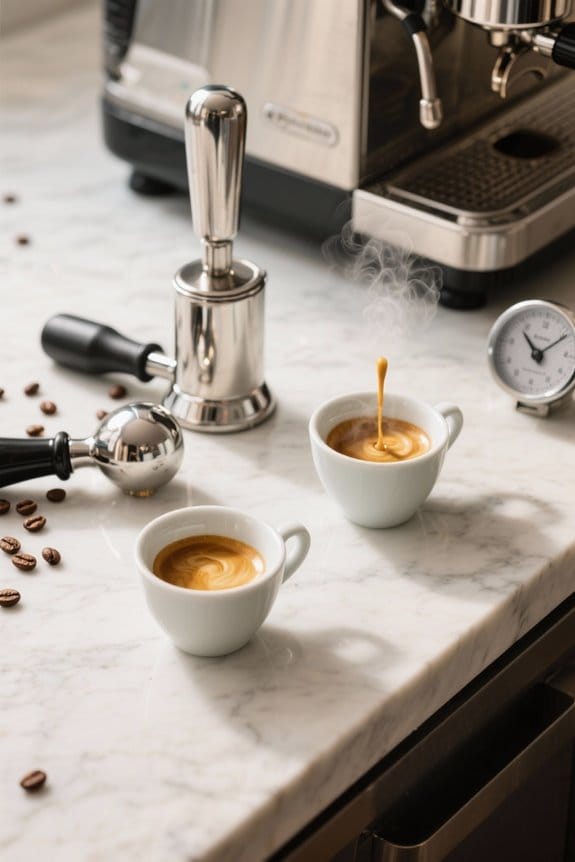
Which Brew Ratio Gives the Most Crema?

The ideal brew ratio for achieving the most crema in espresso is approximately 1:2. This ratio balances coffee grounds and water effectively, resulting in rich, dense crema. Brew temperatures between 195-205°F and precise grind sizes, slightly finer than table salt, also enhance crema quality. Lower yields, such as 25g from 18g coffee, create thicker crema layers. By experimenting with different brew ratios and techniques, one can discover unique flavor profiles and improvements in crema texture.
Key Takeaways
- A brew ratio of approximately 1:2 is optimal for achieving rich and creamy crema in espresso.
- Ristretto shots with a 1:1 to 1:1.5 ratio produce concentrated crema due to less dilution.
- Lower yields, such as 25g from 18g, create denser crema compared to higher yields.
- Finer grind sizes and precise temperature control enhance oil extraction for better crema quality.
- Higher brew ratios, like 1:3, may lead to diluted crema and reduced quality in espresso.
Understanding Brew Ratios
You may be interested


Understanding brew ratios is essential for anyone looking to enhance their espresso experience. The brew ratio indicates the proportion of coffee grounds to the resultant espresso, vital for flavor and crema development. For instance, a ristretto shot typically uses a brew ratio of 1:1 to 1:1.5, emphasizing sweetness and concentrated crema. Traditional espresso, brewed at a ratio of 1:2 to 1:2.5, achieves balanced extraction and optimal crema formation. Conversely, lungo shots utilize a brew ratio around 1:3, resulting in a higher espresso yield but potentially diminishing crema quality. Easy assembly processes are key to varying flavor profiles and extraction characteristics, ensuring the best balance between quality and quantity in espresso expression.
What Is Crema?

Crema serves as a hallmark of freshly brewed espresso, manifesting as a golden foam that rests atop the coffee. This crema varies in color from light to dark brown, with the hue indicating the quality and freshness of the espresso. Generally, lighter crema suggests a well-extracted shot, while darker crema may signal over-extraction or stale beans. Additionally, crema plays a crucial role in retaining the coffee’s aroma, functioning as a barrier that slows down its dissipation. Factors influencing the texture and consistency of crema include bean freshness, roast level, and brewing parameters. Importantly, while many associate crema with quality, it is not a definitive measure of overall espresso quality or taste, but it certainly enhances the visual appeal and experience of the drink. Furthermore, achieving the perfect PID temperature control during brewing can significantly impact the richness and stability of the crema.
Importance of Crema in Espresso

While many coffee enthusiasts appreciate the aesthetic appeal of a well-crafted espresso, the importance of crema extends far beyond its visual allure. Crema serves essential functions, contributing to aroma retention and providing a velvety texture that enhances the drinking experience. The color of crema, ranging from light to dark brown, can indicate the freshness and quality of the coffee used. Although crema improves the overall enjoyment, it should not be regarded as the sole indicator of espresso quality. Brew ratio plays a significant role in crema production, with lower ratios like 1:1 for ristretto often yielding richer crema. Ideal grind size and extraction time, alongside the chosen brew ratio, are critical for achieving a stable and inviting crema layer. Additionally, using durable borosilicate glass carafes can help maintain the temperature of your espresso, further enhancing the crema’s presence.
Ideal Brew Ratio for Crema Development

An effective brew ratio is vital for developing crema in espresso, emphasizing the delicate balance required for perfect extraction. A brew ratio of approximately 1:2 is often regarded as optimal, as it encourages the extraction of oils essential for rich crema formation. Ristretto shots, using a brew ratio of 1:1 to 1:1.5, can yield an even creamier texture and more concentrated crema due to shorter extraction times and higher pressure. Conversely, lungo shots, with a brew ratio around 1:3, may lose crema quality, often resulting in bitterness from over-extraction. Additionally, maintaining an ideal brew temperature of 195-205 degrees Fahrenheit greatly enhances the emulsification of oils, promoting a thicker and more stable crema, regardless of the chosen brew ratio. Furthermore, using a high-quality heat-resistant glass carafe can facilitate controlled pouring, contributing to optimal extraction and crema development.
Recommended Products

Precise Roast Measurement: Achieve professional-grade accuracy with ±0.5 precision and 0.1 resolution, ensuring consistent coffee quality for both beans and grounds

Precision Brewing with Full Data Control: Combine a professional coffee TDS refractometer and high-precision digital coffee scale to measure extraction, concentration, weight, time, and flow rate — ensuring every brew meets the Golden Cup standard.

TALLY PRO PRECISION SCALE - The ultimate coffee scale. Super sensitive and accurate, the luminous OLED screen features the unique Brew Assist Mode to guide you to perfectly proportioned pour-over.
Factors Affecting Crema Quality

Achieving ideal crema quality relies on several interconnected factors that can considerably influence the final result. The brew ratio, essential for balance, affects crema thickness. A typical ratio of 1:2 is best for traditional espresso, producing rich crema. In contrast, a higher 1:3 ratio, common for lungo, can dilute crema, leading to a less satisfying texture. Conversely, a lower brew ratio like 1:1.5, seen in ristretto, yields denser crema. The freshness of coffee beans also matters, as their natural oils emulsify during extraction, aided by the brew ratio for maximum oil extraction. Additionally, water temperature and pressure must align with the chosen brew ratio to enhance stability and richness in crema, ensuring an enjoyable coffee experience. Using high-quality espresso scales can help achieve precision measurements that enhance the overall brewing process and crema quality.
Role of Grind Size in Crema Formation
Grind size plays a significant role in the formation of crema, as it directly influences the extraction process during espresso brewing. Finer grinds increase surface area, promoting better emulsification of oils, which is essential for rich crema development. Consistency in grind size is vital; uneven particles can lead to over-extraction or under-extraction, negatively affecting crema quality. A grind that is too coarse may yield insufficient crema, while excessively fine grinds can result in bitter flavors that obscure crema’s pleasant characteristics. The ideal grind size for espresso is slightly finer than table salt, allowing adequate pressure and water flow. Adjusting grind size in conjunction with brew ratio fine-tunes crema quality, achieving a thicker, more flavorful layer atop the espresso. Additionally, selecting airtight containers for coffee storage helps maintain freshness, which can further enhance the quality of crema during brewing.
Recommended Products

VERSATILITY: A world first for hot and cold brew coffee specialties; choose from 32 options

Set Includes: Jura Z10 Fully Automatic Coffee Machine with Aluminum White and Glass Milk Container
Brews the full spectrum of cold brew, sweet and hot coffee specialties at the touch of a button – 40 specialties
Brewing Temperature and Its Impact on Crema
Brewing temperature plays a significant role in shaping the quality of crema produced during espresso extraction. The ideal brewing temperature range is between 195-205 degrees Fahrenheit. Within this range, oils and gases are effectively extracted, essential components for achieving a rich crema. If the temperature is lower, under-extraction occurs, leading to a thin crema. Conversely, higher temperatures may cause over-extraction, imparting bitterness and diminishing crema quality. Consistently high temperatures enhance oil emulsification, which can increase crema volume and improve texture. As a result, accurate monitoring and adjustment of brewing temperatures are necessary; deviations from this ideal range can result in inconsistent crema quality and overall subpar espresso performance. Ultimately, precision in brewing temperature is fundamental for maximizing crema richness. Additionally, using eco-friendly brewing methods can further enhance the overall coffee experience by promoting sustainability alongside exceptional flavor.
Recommended Products

Digitally displayed PID temperature control adjustable in one-degree increments.

Includes: Mantel, replaceable electric fireplace heater insert, remote control, 6 foot power cord with lay-flat plug, anti-topple safety device and hardware. One year limited warranty. Assembly required.
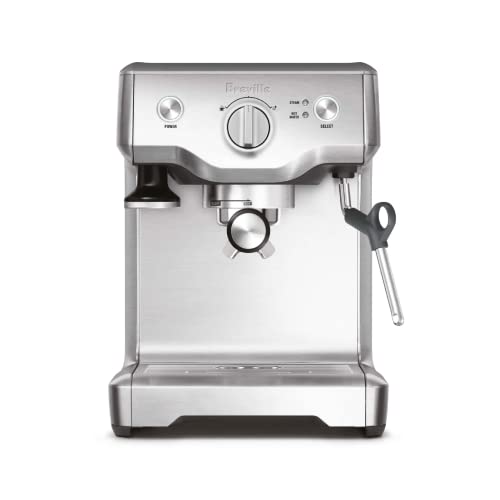
The Breville Duo Temp Pro lets you create third wave specialty coffee at home; This espresso machine ensures balanced flavors from even extraction using low pressure pre-fusion, managing sweetness, acidity and bitterness for the perfect cup every time
Brewing Time Considerations
Precision in brewing time is fundamental to achieving ideal crema in espresso extraction. Typically, the recommended brewing time for espresso ranges from 21 to 28 seconds. Within this window, optimal crema production occurs. Longer brewing times can result in over-extraction, leading to bitterness and a diminished crema quality. The grind size is also essential; a fine grind requires longer brew time to enhance flavor and crema, as it increases the water’s surface area contact. Conversely, brew ratios that are excessively high, such as 1:3 for lungo, may extend brewing time, negatively impacting crema’s amount and quality. Adjusting brewing time alongside coffee-to-water ratios helps identify the “sweet spot” for maximizing the richness of crema in an espresso shot. Additionally, understanding pressure systems can significantly influence the extraction quality and crema formation in your espresso.
Recommended Products

The Breville Oracle fully automatic delivers third wave specialty coffee at home using the 4 keys formula; It has a professional Dual Boiler construction that delivers unparalleled temperature control and simultaneous extraction and steaming

SIMPLIFY AT-HOME COFFEE BREWING: Whether you're in the mood for a latte macchiato, cappuccino, or espresso, the large touchscreen display makes it easy to make and personalize each drink

Dual Boiler: A 1-liter steam boiler and 300ml brew boiler offer simultaneous brewing and steaming.
Relationship Between Yield and Crema
The relationship between yield and crema is critical in espresso preparation, as it directly influences the texture and quality of the crema produced. Lower yields, such as extracting 25 grams from 18 grams of coffee, create a more concentrated flavor and denser crema. This results in a richer texture compared to higher yields, like a 1:3 brew ratio, which often dilutes the crema’s quality. Additionally, brew ratios affect crema thickness; for instance, a ristretto at 1:1 to 1:1.5 generates a thicker crema layer. Extraction time also plays a role, with ideal times (21-28 seconds) enhancing crema volume. As a result, an ideal yield, combined with correct brew parameters, greatly enhances the overall espresso experience. Furthermore, using a bottomless portafilter can provide valuable insights into extraction quality, which can further refine the brewing process.
Measuring TDS for Optimal Crema
How can measuring Total Dissolved Solids (TDS) contribute to achieving ideal crema in espresso? TDS levels in espresso typically range from 8% to 12%. Higher TDS is often linked to richer crema quality, making measurement essential. A refractometer accurately measures TDS, enabling precise adjustments in the brewing process to enhance crema production. Using a coffee-to-water ratio of 1:2 usually results in a more concentrated brew, improving crema formation. Conversely, lower ratios may yield insufficient oil extraction, leading to diminished crema. Monitoring TDS guarantees extraction efficiency remains optimal by adjusting grind size, brew time, and water temperature, preventing under-extraction which causes a thin crema, or over-extraction which degrades quality. These adjustments are vital for achieving the best crema. Additionally, BrewID Technology can help optimize the brewing settings based on the specific K-Cup pod used, enhancing the overall flavor and crema quality.
Tips for Enhancing Crema in Espresso
Achieving a rich and velvety crema in espresso involves multiple factors that can be optimized for better results. Utilizing a ristretto shot, with a brew ratio of 1:1 to 1:1.5, enhances crema due to the shorter extraction time. Freshly roasted coffee beans are essential, as they release carbon dioxide, boosting crema quality. A finer grind size increases the extraction surface area but must be balanced to prevent bitterness. Additionally, applying higher brew pressures of around 9 bars allows for efficient water flow, creating more emulsion and consequently thicker crema. The choice of coffee also matters; Robusta beans, known for their higher oil content, produce a denser and more stable crema compared to Arabica.
Recommended Products

The Breville Dual Boiler with commercial features delivers third wave specialty coffee at home using the 4 keys formula; It has a professional Dual Boiler construction that delivers unparalleled temperature control and simultaneous extraction and steaming

Offers a variety of six different beverages: ristretto, extra-strong ristretto, espresso, extra-strong espresso, coffee, large coffee, as well as hot water for gentle and strong tea infusions. Features a stainless-steel burr grinder that ensures the perfect amount of coffee for a fresh beverage every time

The Breville Bambino Plus delivers third wave specialty coffee at home using the 4 keys formula and is part of the Bambino Series that offers the faster way to professional results at home in a compact footprint: serious espresso, serious value
Experimenting With Brew Ratios for Flavor Discovery
What happens when different brew ratios are explored in espresso preparation? The choice of brew ratio greatly impacts crema production and flavor intensity. For instance, a ristretto shot, brewed at a ratio of 1:1 to 1:1.5, typically results in a concentrated extraction, yielding rich crema due to higher pressure. In contrast, a traditional espresso shot, prepared at a ratio of 1:2 to 1:2.5, offers a balanced flavor but may exhibit less intensity. Meanwhile, lungo shots, brewed at a ratio of around 1:3, often produce less crema as the excess water dilutes essential oils. Experimenting with grind size and brew ratio can enhance crema further, yielding variations in flavor and texture critical for espresso enthusiasts seeking a richer experience.
Frequently Asked Questions
How to Get More Crema on Your Coffee?
To enhance crema, one must master Crema Techniques: utilize freshly ground coffee, precise grind size, ideal temperatures, and firm tamping. Each element works harmoniously, like an orchestra, coaxing the rich flavors and textures to dance.
What Is the 2 1 Rule for Espresso?
The 2:1 rule for espresso refers to using two grams of water for every gram of coffee, optimizing espresso extraction to enhance flavor, aroma, and crema quality for a well-balanced and rich espresso shot.
What Is the 15 15 15 Rule for Coffee?
The 15 15 15 rule for coffee suggests 15 grams of coffee, 15 grams of water, and a 15-minute brew time. This method offers balanced coffee measurements, enhancing flavor while ensuring consistent extraction for ideal taste.
What Coffee Produces the Most Crema?
Espresso made from freshly roasted, high-quality beans typically produces the most crema. Factors influencing crema characteristics include grind size, ideal brew temperature, water mineral content, and a brew ratio conducive to efficient extraction of oils.