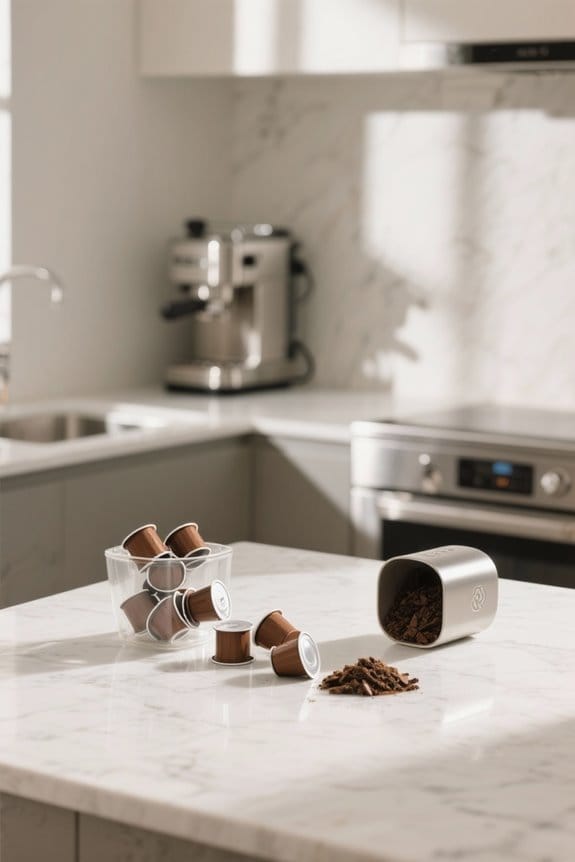
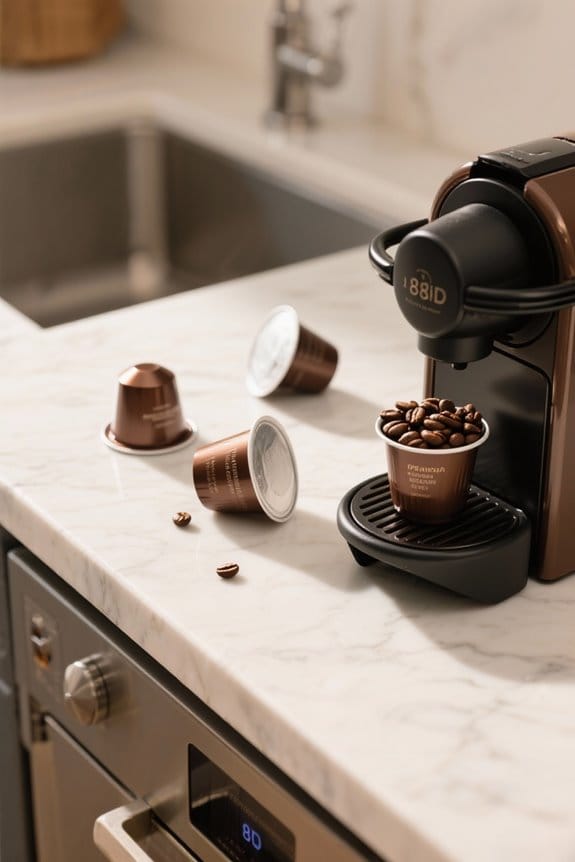
As an Amazon Associate, we earn from qualifying purchases. Some links on this site are affiliate links at no extra cost to you. Our recommendations are based on thorough research and editorial judgment.

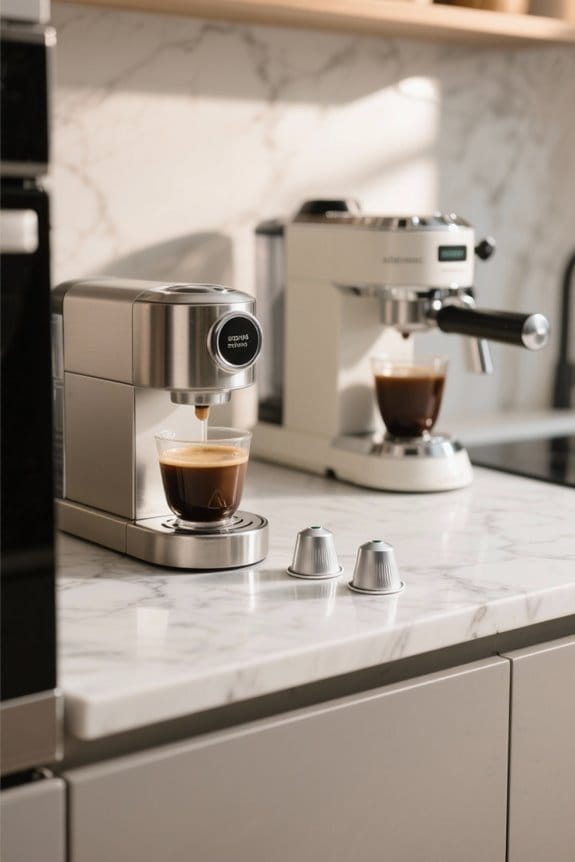
The Environmental Cost of Plastic Capsules

The environmental cost of plastic coffee capsules is significant. In Ireland, less than 20% of aluminum capsules are recycled, contributing to a global waste of about 576,000 metric tons annually. Plastic capsules can persist in landfills for hundreds of years, highlighting their long-term impact. Despite major brands’ recycling efforts, consumer awareness remains low. As pressure increases for sustainable solutions, new innovations and educational campaigns may help mitigate these environmental concerns. Further insights into these developments await exploration.
Key Takeaways
- Plastic coffee capsules can take 500 to 1,000 years to decompose in landfills, contributing significantly to long-term environmental pollution.
- Less than 20% of plastic capsules are recycled properly in Ireland, exacerbating global waste problems linked to single-use products.
- The production and disposal of plastic capsules contribute to an annual 576,000 metric tons of coffee pod waste worldwide.
- Inadequate consumer awareness and misleading recyclability claims hinder effective recycling efforts for plastic coffee capsules.
- Innovations towards compostable and reusable coffee options are crucial for reducing the environmental impact of single-use capsules.
The Rise of Coffee Capsule Consumption in Ireland
You may be interested


As the coffee market in Ireland experiences significant growth, the rise of coffee capsule consumption reflects a notable shift in consumer preferences. In 2026, the market is projected to reach €136.9 million, indicating robust demand for coffee-related products. Currently, over 30% of Irish households own coffee machines that utilize single-serve capsules, emphasizing convenience in coffee consumption. On average, an Irish household consumes 10 coffee capsules weekly, leading to an astonishing total of over 780 million capsules annually. However, this surge raises concerns regarding waste management, as less than 20% of aluminum capsules are recycled properly in Ireland. Given that coffee capsules take decades to decompose, the environmental impacts associated with increased consumption highlight the urgent need for improved recycling initiatives. Switching to reusable K-Cups can significantly reduce the waste generated by single-use capsules.
Environmental Impact of Coffee Capsules

The environmental impact of coffee capsules is a growing concern as their consumption escalates globally. Primarily composed of plastic and aluminum, coffee capsules contribute greatly to waste. Plastic capsules can persist in landfills for 500 to 1,000 years, while aluminum lasts 150 to 200 years without proper recycling. In Ireland, only 20% of aluminum capsules are recycled correctly, resulting in substantial landfill contributions and harmful CO₂ and methane emissions. Annually, global waste from coffee pods reaches about 576,000 metric tons, comparable to the weight of 4,400 school buses. Although some major brands are implementing recycling initiatives, consumer awareness remains low. Innovations like compostable capsules offer promise but rely on specific industrial composting processes to decompose effectively within 3 to 6 months. Compostable pods can significantly reduce plastic waste and promote sustainability by breaking down in proper composting facilities.
Know Your Stats

Understanding the statistical landscape surrounding coffee capsules is imperative for grasping their environmental repercussions. Coffee capsules made from plastic can persist in landfills for 500 to 1,000 years, creating long-term waste and contributing to microplastic pollution. In Ireland, less than 20% of aluminum coffee capsules are effectively recycled, resulting in substantial waste accumulation. Even standard coffee capsules, if not properly disposed of, can take decades to break down, exacerbating their environmental impact. Additionally, biodegradable options can inadvertently produce greenhouse gas emissions, such as methane, if they decay anaerobically in landfills. The persistent nature of these materials highlights the urgent need for improved recycling practices and awareness of the environmental impact associated with coffee capsule consumption. Choosing eco-friendly options like compostable filters can significantly reduce waste and promote sustainability in coffee consumption.
Addressing the Issue

Tackling the environmental challenges posed by coffee capsules requires a multifaceted approach, especially considering the staggering amount of waste generated each year. In Ireland alone, approximately 780 million coffee capsules are consumed annually, with less than 20% of aluminum coffee capsules properly recycled. This inadequate recycling leads to significant coffee capsule waste, as aluminum persists in landfills for 150-200 years and plastic for 500-1,000 years. Major brands have established recycling systems, but low consumer awareness hampers participation. Solutions could include mandatory legislation for compostable capsules and campaigns to educate consumers on the environmental impact of capsule waste. By addressing these issues, the potential for reducing harmful waste and encouraging sustainable practices becomes more attainable. Additionally, promoting biodegradable filters can provide an eco-friendly alternative for coffee lovers.
Recommended Products

Capsules compatible with OrginalLine machines by Nespresso

Roasted with Precision: Our high-quality, bold E.S.E. coffee pods are intense and dynamic, with captivating notes of cocoa and dried fruit, finishing with a deep, full-bodied espresso experience.

Compatible with Nespresso Original Machines: Artizan Coffee organic capsules are specifically designed to work seamlessly with Nespresso Original brewers, including Delonghi C190, D290, Citiz, CitiZ & Milk, Maestria, U, Le Cube, Inissia, Lattissima Plus, Lattissima Pro, Lattissima Touch, Lattissima One, Grand Lattissima, Pixie, KitchenAid, Prodigio, Expert, Essenza Mini, Essenza Plus, Creatista Uno, Creatista Plus, and Creatista Pro
Innovations in Coffee Packaging

What advancements are emerging in coffee packaging that address environmental concerns? Recent innovations indicate a shift towards more sustainable options. Particularly, compostable coffee capsules made from materials like sugarcane bagasse offer a viable alternative to plastic. Additionally, Migros has introduced “coffee balls” with a seaweed-based coating, promoting full compostability. Tinplate coffee capsules are gaining traction due to their high material circularity indicator of 0.97, far exceeding aluminum’s 0.80. In addition, some brands are producing aluminum capsules that enhance recyclability, catering to environmentally conscious consumers. Despite these promising developments, issues remain, as many compostable capsules still struggle due to inadequate industrial composting facilities. This underscores the need for improved recycling infrastructure to support these sustainable packaging solutions. Furthermore, the popularity of organic coffee pods reflects a growing consumer demand for environmentally friendly options in the coffee market.
Recommended Products

There's dark and then there's Seriously Dark. This decaffeinated artisan blend is extra dark and rich with notes of walnut and chocolate with a sweet finish. Seriously Dark...
Recycling Challenges and Legal Accountability
Despite advancements in sustainable coffee packaging, recycling challenges continue to pose significant obstacles for the industry. The shift to polypropylene for K-Cups improved material strength, yet only one U.S. facility accepts these capsules, limiting their recycling options. Globally, approximately 39,000 coffee capsules are produced every minute, many of which land in landfills, where they can take up to 500 years to decompose. Legal accountability has emerged, exemplified by a $10 million settlement against Keurig for misleading recyclability claims. New regulations in the EU are aimed at reducing packaging waste and addressing the environmental impact of single-use coffee capsules. In Brazil, only 11% of coffee capsules were recycled in 2017, highlighting persistent global recycling challenges. The introduction of reusable K-Cup filters provides a sustainable alternative, significantly reducing landfill waste and promoting eco-friendly coffee habits.
Alternatives to Traditional Brewing Methods
The mounting environmental concerns surrounding single-use coffee capsules have prompted many consumers to seek alternatives to traditional brewing methods. Research shows that alternatives like Moka pots and instant coffee generate lower greenhouse gas emissions compared to single-use capsules. In addition, using reusable coffee pods notably reduces waste generation, making them an eco-friendly choice. Life-Cycle Assessment (LCA) studies reveal that conventional drip coffee makers also exhibit considerable environmental impacts, often on par with single-serve systems. Innovations like Migros’ coffee balls, crafted from seaweed-based materials, offer fully compostable options, further reducing dependence on traditional plastic capsules. As awareness of these environmental impacts grows, a shift towards sustainable brewing methods is becoming more evident among coffee enthusiasts. By integrating reusable K-Cups, consumers can significantly lower their environmental toll and enjoy a personalized coffee experience.
Recommended Products

Always ready and brews in under a minute

COUPONS for Primo water included: $5 OFF a bottle of pre-filled exchange water + a FREE self-service water refill. Redeemable at thousands of retail locations nationwide.

GEN 3 VERSION BREWER: Latest production model includes firmware updates with pourover coffee and iced espresso nitro style brewing options. Hardware improvements include sturdier handle, updated pump and larger diameter needle for more even brewing pressure.
Consumer Awareness and Behavior
How can consumer awareness shape environmentally friendly practices in coffee consumption? In Ireland, less than 20% of aluminum coffee capsules are recycled properly, which underscores a significant gap in consumer awareness regarding effective recycling practices. Many coffee drinkers remain uninformed about the environmental impact of capsule waste, with a large proportion ending up in landfills. The average household consumes around 10 capsules weekly, contributing to over 780 million capsules annually. This low recycling participation indicates that convenience remains a barrier to sustainable disposal. Public awareness campaigns are essential, as they educate consumers on the consequences of coffee capsule waste and encourage participation in recycling programs, ultimately promoting a culture of environmental responsibility. Additionally, embracing reusable K-Cups can significantly reduce landfill waste and foster sustainable coffee consumption habits.
The Myth of Eco-Friendliness in Coffee Pods
What constitutes true eco-friendliness in the context of coffee pods? Many consumers consider convenience, often overlooking the significant environmental impact of plastic coffee capsules. These pods take 500 to 1,000 years to decompose in landfills, during which time they release harmful microplastics and toxic chemicals. Despite the presence of recycling programs, less than 20% of aluminum capsules are recycled properly in Ireland. This contributes to approximately 576,000 metric tons of global waste annually, equivalent to the weight of about 4,400 school buses. Additionally, many coffee drinkers remain unaware of the proper recycling methods, further complicating the sustainability narrative. Innovative composting options face challenges due to the lack of industrial composting facilities, limiting their accessibility and effectiveness. Choosing eco-friendly coffee pod options can significantly reduce landfill waste and promote sustainable brewing practices.
Compostable Coffee Pod Solutions
Innovative compostable coffee pod solutions are emerging as viable alternatives to traditional plastic and aluminum capsules, addressing growing environmental concerns. Compostable capsules made from biodegradable materials, such as sugarcane bagasse, can decompose within 3-6 months under ideal conditions. However, many require industrial composting facilities, which may not be accessible to all consumers. This limitation can hinder their effectiveness as eco-friendly solutions. Additionally, improper disposal in landfills can lead to methane emissions, underscoring the need for proper disposal methods. Innovations like Migros’ “coffee balls,” utilizing seaweed-based coatings, showcase exciting advancements in sustainability. As consumer awareness increases, ongoing education about compostable capsules will be essential for maximizing their environmental benefits and minimizing negative impacts associated with traditional coffee pods. Furthermore, the adoption of reusable coffee filters can further enhance sustainability in brewing practices.
Recommended Products

Classic Medium Roast - ( Packs) - Smooth & Balanced Flavor w Flavor - Enjoy a smooth, satisfying Senseo coffee with balanced aroma, rich taste, and a crema layer in every cup.

Compatible with Nespresso Original Machines: Artizan Coffee organic capsules are specifically designed to work seamlessly with Nespresso Original brewers, including Delonghi C190, D290, Citiz, CitiZ & Milk, Maestria, U, Le Cube, Inissia, Lattissima Plus, Lattissima Pro, Lattissima Touch, Lattissima One, Grand Lattissima, Pixie, KitchenAid, Prodigio, Expert, Essenza Mini, Essenza Plus, Creatista Uno, Creatista Plus, and Creatista Pro

Industry Responsibility and Future Directions
As the coffee industry faces increasing scrutiny over environmental sustainability, major brands are recognizing their responsibility to reduce the ecological footprint of their products. Significantly, Keurig’s class-action lawsuit highlighted the issue of recyclability, resulting in a $10 million settlement that underscored the environmental impact of coffee capsules. With stringent EU regulations on the horizon, companies are being pressured to enhance the recyclability of their offerings while minimizing packaging waste. Innovative solutions, such as compostable coffee pods crafted from biodegradable materials, aim to address traditional capsule challenges. Additionally, consumer demand for sustainable options is prompting brands to explore eco-friendly materials. Continuous research into the environmental impact of coffee capsules will define future directions, leading to a more sustainable coffee supply chain.
Recommendations for Sustainable Coffee Practices
To foster a more sustainable coffee industry, several recommendations can be implemented to mitigate the environmental impact of coffee capsules. First, the introduction of compostable materials, allowing capsules to decompose in 3-6 months, can greatly reduce landfill waste compared to traditional aluminum pods. Current recycling initiatives must also be enhanced, as less than 20% of aluminum coffee capsules are recycled properly in Ireland. Engaging consumers through informative campaigns can increase awareness about recycling programs’ importance. Additionally, legislative measures mandating compostable materials for coffee capsules could spur wider adoption and innovation. These efforts combined contribute to sustainable coffee practices, ultimately aiming to reduce the environmental footprint of the coffee industry, benefiting both consumers and the planet.
Recommended Products

EVIDENCE-BASED, QUALITY INGREDIENTS: Adapt Naturals Bio-Avail grass fed colostrum with bovine lactoferrin and beta glucan powder - 2500mg of colostrum, 2.5x more than average, plus 100mg of lactoferrin and 250mg of beta glucan per serving.

COCONUT CARAMEL CRUNCH MEDIUM ROAST - Taste the unique combination of tropical coconut and sweet caramel

PRE-INFUSION BREW PROCESS: Gently soaks grounds before brewing to produce a deeper, more aromatic/flavorful cup of coffee. Compatible with K-Cups and most other coffee pods.
Frequently Asked Questions
How Wasteful Are Nespresso Pods?
Nespresso pods exhibit significant wastefulness due to low recycling rates, despite eco-friendly innovations. An environmental impact comparison reveals that consumer behavior analysis shows a need for improved pod disposal methods versus alternative coffee brewing techniques’ sustainability.
How Many Coffee Pods End up in Landfill?
In the glamorous world of coffee, where morning rituals reign, an astonishing 576,000 metric tons of coffee pods languish in landfills annually, a proof of the tragic waste management failure and dismal recycling rates, multiplying environmental footprints.
Do Coffee Pods Actually Get Recycled?
Coffee pod recycling remains low, with many consumers unaware of the recycling myths surrounding them. This contributes to significant plastic waste impact, highlighting the need for sustainable alternatives and increased environmental responsibility in coffee consumption habits.
How Do Plastic Cups Affect the Environment?
Plastic cups, often drifting like colorful debris in oceans, considerably impact marine ecosystems. Recycling challenges hinder waste reduction efforts, while biodegradable options may not be widely embraced due to consumer behavior, perpetuating a cycle of plastic pollution.