As an Amazon Associate, we earn from qualifying purchases. Some links on this site are affiliate links at no extra cost to you. Our recommendations are based on thorough research and editorial judgment.

The Evolution of Coffee Capsules in Home Brewing

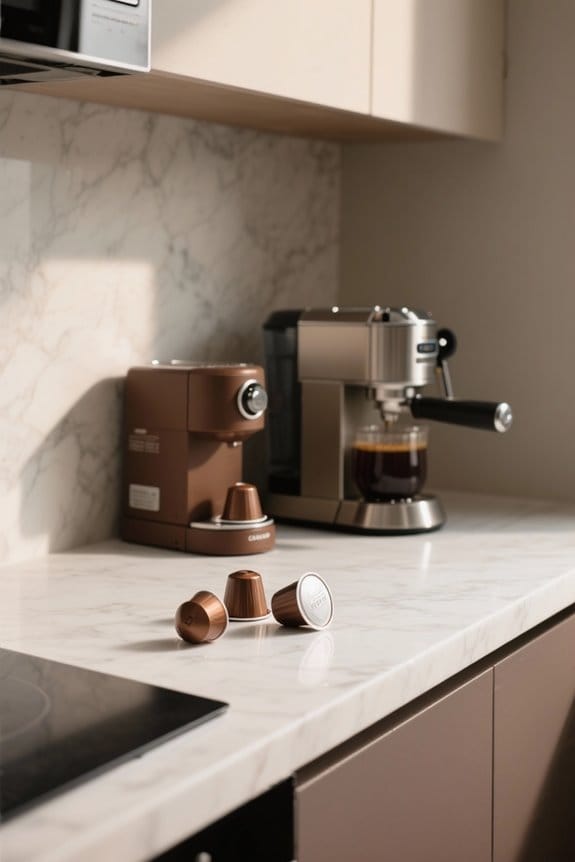
The evolution of coffee capsules has greatly transformed home brewing. Starting with Julius Melitta’s paper filter in 1908, Nespresso revolutionized the market in 1986 by combining a machine with pre-portioned capsules, ensuring consistent quality. This led to a surge in single-serve options from competitors like Keurig and Lavazza. As the market is projected to grow from 1% to 20% in a decade, environmental concerns and innovations in sustainability are increasingly shaping future developments in this industry. More insights await.
Key Takeaways
- The introduction of the Nespresso system in 1986 revolutionized home brewing by simplifying espresso preparation with pre-portioned capsules.
- Growing consumer demand for convenience led to the emergence of brands like Keurig, Dolce Gusto, and Lavazza, expanding the coffee capsule market.
- Sustainability concerns have prompted innovations in reusable, biodegradable, and recyclable coffee pods to minimize landfill waste associated with single-serve capsules.
- Continuous advancements in brewing technology enhance flavor consistency and efficiency, driving ongoing research and product diversification in the coffee capsule industry.
- The coffee capsule market is projected to significantly grow, indicating a rising popularity in both home brewing and commercial settings, including bars and restaurants.
A Capsule of Inspiration
You may be interested


In the evolution of coffee brewing, one significant milestone emerged in the early 20th century, when Julius Melitta patented the first coffee filter using a paper cone in 1908. This innovation laid the foundation for the development of modern coffee capsules. Nespresso introduced its single-serve system in 1986, offering convenient high-quality coffee brewed from pre-portioned capsules. Each aluminum capsule guarantees consistent flavor and aroma, appealing to consumers seeking the espresso experience at home. As the coffee market has expanded, so have concerns regarding the environmental impact of these capsules, leading to a push for sustainability. Manufacturers are now exploring eco-friendly alternatives to traditional materials, reflecting a growing commitment to responsible brewing while maintaining the integrity of coffee’s rich flavor. Additionally, the shift towards biodegradable materials has influenced product designs in both capsules and filters.
Nespresso’s Game-Changing Move

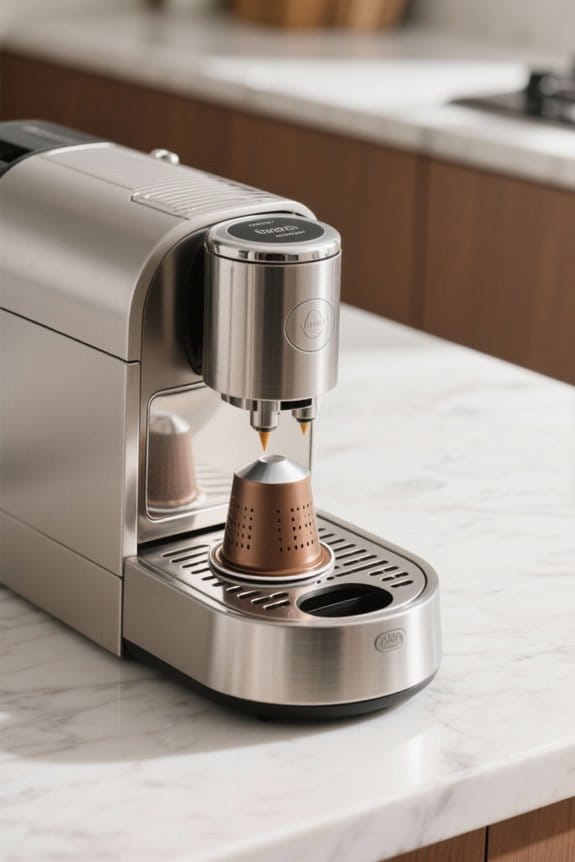
Although many coffee enthusiasts once relied on traditional brewing methods, Nespresso’s introduction of the Nespresso System in 1986 redefined the landscape of home brewing. This innovative approach combined a sleek coffee machine with a variety of pre-portioned coffee capsules, ensuring consistent flavor and aroma in each brew. Nespresso’s system enabled consumers to enjoy high-quality espresso without the complexities of traditional coffee brewing. The convenience of single-serve coffee appealed to many, shifting consumer preferences towards ready-made solutions. By showcasing the potential of coffee capsules, the Nespresso System not only cultivated a loyal customer base but also inspired competitors to enter the growing market. Consequently, home brewing transformed, embracing simplicity and quality. Additionally, Nespresso machines are designed for energy efficiency standards, which further enhances their appeal among environmentally-conscious consumers.
The Rise of Competition

The competitive landscape of coffee capsules witnessed significant growth following Nespresso’s pioneering success, with numerous brands capitalizing on the burgeoning demand for single-serve brewing solutions. Introduced in 2004, Keurig launched its coffee machine utilizing K-Cups, offering diverse options from various coffee brands, which expanded consumer choices immensely. Competitors, including Dolce Gusto, Tassimo, and Lavazza, emerged, each presenting unique features that distinguished their products in the saturated market. This rise in competition prompted Nespresso to innovate and diversify its product line to preserve its market share and retain loyal customers. The rapid growth of these alternative pod systems reflects the lucrative potential acknowledged after Nespresso’s debut, aligning with increasing consumer demand for convenient home brewing. Notably, models like the Keurig K-Duo can brew both K-Cup pods and ground coffee, showcasing the versatility that consumers seek in their coffee machines.
Recommended Products

Ideal for large size businesses

Energize your breakroom with the Keurig K-3500 Coffee Maker, the latest innovation from Keurig. The brewer blends intuitive technology with clean lines and modern design, delivering an unmatched range of beloved brands of coffee, cocoa, and tea, all at the touch of a screen. Ideal for the busy breakroom, this brewer is engineered for continuous use and back to back brewing. - 5 cup sizes including new 12 oz. brew size

Ideal for large businesses
A Growing Concern for the Environmental Impact

Growing awareness of sustainability has emerged alongside the rise of coffee capsule competitors. The popularity of single-serve coffee has heightened environmental concerns, particularly regarding plastic pods. These pods contribute considerably to landfill waste, taking hundreds of years to decompose. While some brands have introduced aluminum recyclable capsules, the recycling process can be energy-intensive, complicating their overall environmental impact. In response, coffee pod manufacturers are exploring eco-friendly alternatives. The demand for reusable pods is increasing, allowing consumers to fill them with their preferred coffee grounds, thereby reducing waste. Technological advancements play an essential role in driving innovation towards more sustainable coffee pod systems, addressing the urgent need for improved sustainability in coffee consumption while mitigating environmental challenges associated with traditional coffee machines. Furthermore, many brands are now focusing on recyclable aluminum pods to promote eco-conscious coffee drinking habits.
The Future of Coffee Pods

An increasing number of manufacturers are committing resources to revolutionize coffee pods for a more sustainable future. This shift focuses on developing reusable coffee pods, which offer consumers an eco-friendly option that allows for personal ground selection. Substantial advancements in technology are enhancing coffee brewing systems, improving both taste and efficiency. The coffee capsule market, currently a mere 1% of the overall coffee industry, is forecasted to grow to as much as 20% in the next decade. Innovations include biodegradable pods and compostable pods, spearheaded by brands like Nespresso and Pod Life Coffee. These advancements aim to considerably reduce the environmental impact of single-serve coffee, promising a future aligned with sustainable coffee practices. As a result, reusable K-Cups are becoming increasingly popular among eco-conscious consumers for their ability to significantly reduce waste.
Brewing Process of Capsule Coffee
Brewing capsule coffee employs a streamlined and efficient process that enhances convenience for home baristas. The coffee machine initiates the brewing process by heating water and inserting a coffee pod. When activated, the machine injects hot water under pressure into the capsule, allowing it to expand slightly. Sharp spikes on the capsule puncture it, facilitating the flow of pressurized water. This action extracts rich flavor and yields a quality espresso shot. The process relies on consistent pressure, typically around 9 bars, and precise water temperature, usually between 90 to 96 degrees Celsius, to achieve a frothy texture and robust flavor. Ultimately, the entire brewing method is designed for speed, ensuring a delightful cup of espresso with minimal effort. This efficient process is complemented by variety pack selections that cater to diverse taste preferences and brewing sizes.
Eco-Conscious Improvements and Market Potential
The shift towards eco-conscious improvements in coffee capsules marks a significant transformation in the industry. Innovations have led to fully biodegradable and compostable coffee pods, responding to increasing consumer demand for sustainability. Traditional coffee capsules weighed 3 grams and contained a 2-gram aluminum filter, but newer designs have eliminated filters, enhancing aroma extraction while improving efficiency. The construction now uses seven layers of polypropylene, reducing packaging and preserving freshness. Presently, coffee capsules account for about 1% of the coffee market, with expectations of growth to 20% over the next decade. Increased demand for single-serve coffee in bars and restaurants indicates substantial market potential. The focus on quality and convenience drives further advancements in eco-conscious designs. Additionally, the rise of reusable capsules is further promoting sustainable coffee brewing practices by significantly reducing waste from single-use pods.
Recommended Products

Decaf - ( Packs) - Medium Roast with Smooth & Balanced Flavo Flavor - Enjoy a smooth, satisfying Senseo coffee with balanced aroma, rich taste, and a crema layer in every cup.

QUICK AND EASY: 96 Hawaiian Blend single serve, compostable, coffee pods. Cameron's Coffee strives to provide the convenience of a single serve pod with the quality of café brewed coffee.
The information below is per-pack only
Innovation and Product Expansion
As the coffee capsule market continues to evolve, innovation drives product expansion beyond traditional offerings. The Nespresso system, launched in 1986 by Eric Favre, set a precedent by delivering consistent flavor and aroma through compatible coffee capsules. Over the years, Favre’s team has patented multiple technologies to enhance the espresso experience. Additionally, Monodor has expanded its reach via licensing agreements with well-known brands like Lavazza and Migros, increasing market accessibility. Innovations now include reusable coffee pods and research into sustainable materials, reflecting a shift toward eco-conscious practices. Moreover, the product line has diversified, encompassing a variety of coffee, hot chocolate, and tea capsules, catering to the growing demand for diverse beverage options among consumers.
Recommended Products

ONE TOUCH: Prepare 15 barista quality specialties including espresso, coffee, cappuccino, flat white and latte macchiato at the touch of a button.Filter type:Reusable

DRIP COFFEE: Experience convenience with fully automatic brewing and 24-hour programmability and enjoy up to 10 cups of coffee with the 10-cup insulated thermal carafe that keeps coffee hot for hours.

Note: 1)Too coarse a grind, too little coffee, or insufficiently tamping the grounds before brewing can all lead to inadequate pressure for a proper brew. 2)It is important to note that the amount of espresso extracted will vary depending on the grind size and amount and reprogramming may be needed when the size and amount are adjusted.Filter type:Reusable
Frequently Asked Questions
What Is the History of Capsule Coffee?
The history of capsule coffee involved early innovations in coffee packaging, leading to the development of convenient brewing technology. Market competition intensified as consumer preferences shifted, fostering brand loyalty while raising awareness of environmental impact and flavor quality.
When Did Coffee Pods Become Popular?
Coffee pods became popular in the early 2000s, driven by evolving coffee trends and brewing technology. Consumer preferences highlighted the convenience factor and diverse pod varieties, fueling market growth despite concerns over environmental impact and price comparison among brands.
Are Nespresso Pods Garbage?
Nespresso pods face criticism for their environmental impact, largely due to recycling issues and waste generation. However, user reviews highlight their convenience factor, flavor comparison, and brand loyalty amidst shifting market trends and taste diversity.
Was Nespresso or Keurig First?
Nespresso originated first in 1986, introducing capsule innovation in home brewing. Keurig launched later in 2004, diversifying flavor variety and enhancing coffee convenience, ultimately intensifying market competition while raising concerns about environmental impact and brand loyalty.