As an Amazon Associate, we earn from qualifying purchases. Some links on this site are affiliate links at no extra cost to you. Our recommendations are based on thorough research and editorial judgment.

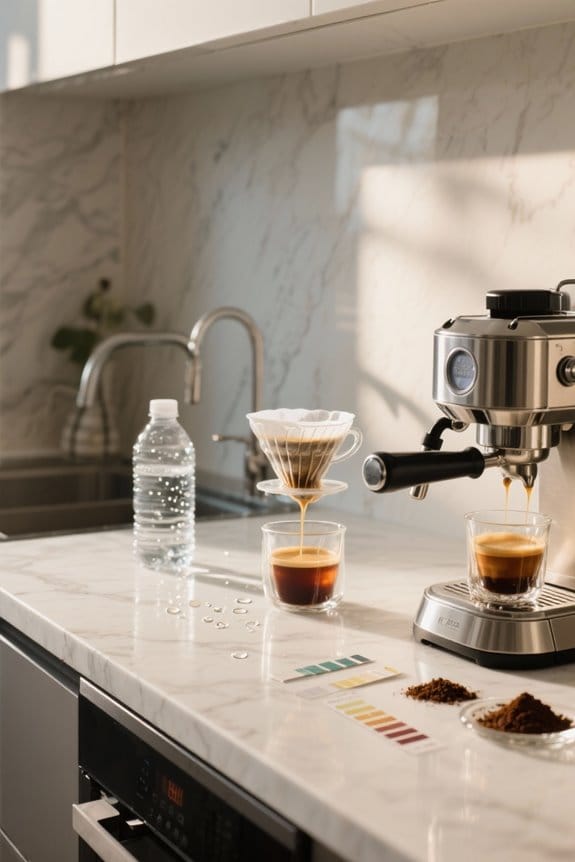
Why Water Hardness Impacts Coffee Flavor

Water hardness greatly impacts coffee flavor by influencing mineral extraction during brewing. Ideal water hardness ranges between 75 and 250 parts per million (PPM), with 150 PPM being optimal. Calcium enhances a creamy mouthfeel, while magnesium boosts fruity notes. Insufficient mineral content can lead to under-extraction, resulting in flat coffee. Conversely, excessive hardness may cause bitterness due to over-extraction. Understanding these factors can refine brewing techniques and improve overall flavor quality, providing a better coffee experience. More insights await.
Key Takeaways
- Water hardness affects flavor extraction efficiency; ideal levels balance calcium and magnesium for optimal taste development.
- High calcium and magnesium levels can enhance richness, while excessive hardness may lead to bitterness.
- Low mineral content risks under-extraction, resulting in a flat and dull coffee profile.
- Maintaining a neutral pH (6.5 to 7.5) ensures flavors are properly balanced during brewing.
- The right total dissolved solids (TDS) range (75-250 ppm) is crucial for maximizing coffee’s complex flavors.
The Role of Water Hardness in Flavor Extraction
You may be interested


Water hardness plays an important role in the flavor extraction process of coffee. It is measured in parts per million (PPM) and influences how well water interacts with coffee grounds. Ideal brewing water should have a pH between 6.5 and 7.5, promoting balanced flavors. Optimal flavor extraction benefits from levels of calcium and magnesium, which enhance creaminess and fruitiness. Total dissolved solids (TDS) should ideally be around 150 ppm, with a recommended range of 75 to 250 ppm. When water hardness is excessive, over-extraction can occur, resulting in bitter notes. Conversely, soft water may lead to under-extraction, producing flat-tasting coffee. Regular maintenance of filtration systems is vital to mitigate limescale buildup and guarantee effective coffee extraction. Additionally, using certified filters can significantly improve water quality, enhancing the overall coffee flavor experience.
Understanding Minerals: Key Players in Coffee Brewing

Minerals play a significant role in the coffee brewing process, influencing flavor extraction and overall taste. The mineral content, primarily calcium and magnesium, affects extraction efficiency, which determines the resulting coffee flavors. Ideal brewing water typically ranges from 75-250 PPM, with around 150 PPM being ideal for a balanced brew. Magnesium enhances fruity and acidic notes, while calcium contributes creaminess and chocolatey undertones. An imbalance in these minerals can yield undesirable flavors; high hardness may result in bitter coffee, whereas overly soft water leads to flat notes. Additionally, hydrogen carbonate buffers acidity, essential for nuanced flavor development. Understanding these minerals is essential for achieving the best possible coffee experience. Using electric moka pots can help maintain consistent brewing conditions, further enhancing flavor profiles.
Balancing Calcium and Magnesium for Optimal Taste

Achieving a harmonious balance of calcium and magnesium in brewing water is essential for enhancing coffee’s flavor profile. Best taste typically arises when water hardness ranges between 75-250 PPM, with calcium carbonate levels ideally between 50-175 PPM. Calcium contributes to a creamy texture, while magnesium enhances fruity notes, creating complexity in the brew. Excessive calcium can cause limescale buildup, impacting espresso machines, whereas insufficient levels may lead to under-extracted, flat-tasting coffee. Specialty coffee brewers often prefer softer water, rich in magnesium, for improved brightness and acidity. Maintaining balanced mineral content is vital, as it prevents undesirable flavors, ensuring an exceptional extraction process and rich, well-rounded coffee experiences. Additionally, grind size adjustability can further enhance the coffee’s flavor by allowing for precise extraction tailored to the mineral content of the water used.
Effects of High Mineral Content on Flavor Profiles

How does high mineral content impact the flavor profiles of coffee? Elevated levels of calcium and magnesium enhance flavor extraction, resulting in a richer coffee experience. Calcium contributes to a creamy texture, while magnesium amplifies fruity notes, enriching the beverage’s complexity. However, excessive mineral content can disrupt balance, leading to over-extraction and undesirable bitterness. Water hardness, ideally ranging from 75-250 parts per million (PPM), is critical for ideal brewing; levels above this may result in harsh flavors. Additionally, the concentration of hydrogen carbonate influences coffee acidity levels, where lower amounts help maintain a pleasant taste without overwhelming bitterness. Understanding the specific mineral content in water is essential to achieve well-rounded flavor and overall drinkability in the final cup. Moreover, using a burr grinder can significantly improve the consistency of the grind, enhancing the extraction process even further.
The Impact of Low Mineral Content on Coffee Quality

Low mineral content in water can greatly affect the quality of coffee brewed. Water with low minerals, specifically below 75 ppm Total Dissolved Solids (TDS), leads to under-extraction. This means the complex flavors from coffee beans do not develop fully, resulting in flat and sharp taste profiles. Soft or distilled water often lacks essential minerals like calcium and magnesium, diminishing richness and depth. Magnesium is particularly important, as it enhances fruity flavors, contributing to a vibrant coffee experience. Furthermore, low water hardness can upset the balance of acidity and bitterness, further reducing overall enjoyment. Ultimately, using water with adequate mineral content is imperative for ideal flavor extraction and superior coffee quality. Additionally, using an airtight coffee canister can help preserve the freshness of coffee beans, ensuring optimal flavor extraction.
Exploring Water Treatment Substances and Their Effects
Water treatment substances play a crucial role in shaping the quality of coffee brewed from tap water. Chlorine is a common water treatment chemical, often added to disinfect water, yet it can impart unpleasant odors and tastes to coffee even in negligible amounts. This non-detectable chlorine binds with coffee’s delicate aromas, notably altering flavor profiles and reducing coffee quality. In addition, organic matter present in water, such as geosmin, contributes undesirable earthy or musty flavors at minimal concentrations. The presence of organic contaminants can lead to inconsistent flavors, underscoring the essential importance of water quality. Ultimately, the interaction of water treatment substances with coffee can greatly affect the overall tasting experience, making careful consideration paramount for ideal brewing. Additionally, using airtight coffee containers can help preserve the freshness and flavor of coffee, counteracting some negative effects of poor water quality.
Organic Compounds: Hidden Influences on Coffee Flavor
The interplay of organic compounds in water can greatly shape the flavor profile of brewed coffee, often without detection. Substances such as geosmin contribute undesirable flavors, even in trace amounts, considerably affecting the overall taste profile. Contaminants like plasticizers and solvents can also alter coffee flavor, masking the intricate nuances of the beans. Furthermore, organic matter—present below regulatory limits—can interact with coffee’s delicate aromas, leading to off-putting flavor characteristics. Strict regulations on organic contaminants are essential for minimizing such off-flavors, resulting from improper water or coffee bean processing. Ultimately, organic substances can influence the cup quality and sensory experience, determining whether a brew is delightful or disappointing, emphasizing the importance of water purity in coffee preparation. The effects of antioxidants in green tea can also enhance the overall flavor experience when paired with coffee.
Choosing the Right Water: Tap, Distilled, or Bottled?
Selecting the appropriate type of water can greatly influence coffee flavor during brewing. Tap water, with its varying mineral content, may create muddled flavors due to an imbalance of beneficial and harmful minerals. Distilled water, while pure, lacks essential minerals and can lead to flat coffee flavors, inhibiting effective flavor extraction. Bottled spring water often provides the best option, typically containing 100-200 ppm total dissolved solids, which can enhance coffee taste through a balanced mineral profile. Ideally, water hardness for coffee brewing should fall between 75-250 ppm to promote ideal flavor extraction. High pH levels in hard water may result in bitterness, while softer water often supports a rich, balanced taste, vital for appreciating the complexities of coffee. Additionally, using premium materials in your coffee mugs can also elevate the overall coffee experience by enhancing aroma retention and flavor enjoyment.
Best Practices for Brewing With Quality Water
For ideal coffee brewing, utilizing quality water is essential. Maintaining water hardness between 75-250 ppm is vital, with 150 ppm recommended for best flavor extraction. Balanced minerals, particularly calcium and magnesium, enrich the coffee experience; calcium adds creaminess while magnesium enhances fruity acidity. Implementing effective water filtration systems, such as activated carbon filters, removes chlorine and impurities, ensuring superior water quality in coffee. Testing tap water for pH levels is also important, aiming for a neutral range of 6.5 to 7.5, as high pH can create bitter flavors. Additionally, regular maintenance of coffee machines prevents scaling from hard water, allowing for improved water flow and brewing technique efficiency. By following these practices, coffee enthusiasts can greatly enhance their brews. Furthermore, using high-quality coffee grinders with adjustable grind settings can further optimize flavor extraction based on water quality.
Experimenting With Water Hardness for Flavor Enhancement
How might altering water hardness lead to different flavor experiences in coffee? Experimenting with water hardness is essential for optimizing coffee flavor, as it directly influences extraction efficiency. Softer water, characterized by lower mineral content (ideally between 75-250 ppm total dissolved solids), typically enhances the extraction of delicate flavors, resulting in a balanced cup. In contrast, hard water, exceeding 250 ppm, can over-extract, producing undesirable bitter and chalky notes. Additionally, magnesium elevates fruity flavors, while calcium enhances creamy notes. Consequently, adjusting the mineral balance through water hardness can refine specific tasting notes, creating a customized brew. Regular testing of brewing water’s hardness using testing kits is pivotal for fine-tuning mineral content and achieving the desired coffee flavor. Furthermore, the quality of carafe material can also impact overall brewing performance, making it essential to consider when optimizing flavor.
Frequently Asked Questions
Does Hard Water Change Coffee Taste?
Hard water alters coffee taste through its mineralization, affecting extraction and flavor compounds. Higher mineral content can create bitterness, while adequate pH levels and proper equipment maintenance, along with water filtering, enhance brewing quality and flavor balance.
What Does Water Hardness Do for Coffee?
Water hardness influences coffee extraction by affecting the balance of water minerals, which interact with flavor compounds. Ideal hardness levels enhance brewing methods and water temperature adaptability, ensuring a better flavor profile in the finished cup.
Does Water Hardness Affect Taste?
Water hardness subtly shapes taste, like a conductor guiding an orchestra. Water mineralization affects extraction efficiency, brewing temperature, and flavor compounds, ensuring acidity balance and coffee clarity through precise mineral profiles for a harmonious brew.
Does Limescale Affect the Taste of Coffee?
Limescale buildup adversely affects taste consistency by obstructing coffee extraction and altering brewing methods. The accumulation of water minerals interferes with flavor profile, making equipment maintenance essential to guarantee superior coffee flavor and quality.