As an Amazon Associate, we earn from qualifying purchases. Some links on this site are affiliate links at no extra cost to you. Our recommendations are based on thorough research and editorial judgment.


Why Your Coffee Tastes Weak and How to Fix It

Weak coffee often arises from incorrect coffee-to-water ratios, grind size, or brewing temperature. For ideal strength, use 1 gram of coffee per 15-17 grams of water, or about 2 tablespoons for 6-8 oz of water. Fine grind is essential for espresso, while coarse suits French press brewing. Additionally, verify water temperature is between 195°F and 205°F. Fresh beans, stored properly, enhance flavor. Understanding these elements can greatly improve coffee quality, and further insights can enhance brewing techniques.
Key Takeaways
- Use an appropriate coffee-to-water ratio, ideally 1 gram of coffee for every 15-17 grams of water, to enhance flavor strength.
- Ensure the grind size matches your brewing method; coarse for French press and fine for espresso, to optimize extraction.
- Brew with water heated between 195°F to 205°F to avoid under-extraction and improve flavor richness.
- Allow adequate brewing time; aim for 4-5 minutes for French press and 2.5-3 minutes for pour-over methods.
- Store coffee beans in a cool, dark, airtight container and use freshly ground coffee for maximum flavor retention.
Understanding the Coffee-to-Water Ratio
You may be interested



The coffee-to-water ratio plays a crucial role in determining the strength and flavor of brewed coffee. The ideal ratio is approximately 1 gram of coffee for every 15–17 grams of water, which translates to about 2 tablespoons of coffee for 6–8 oz of water. A common mistake is using too little coffee, which can lead to weak coffee that lacks flavor. Conversely, excess coffee can create a bitter brew. Each brewing method may require specific adjustments; for instance, a 1:15 ratio is often recommended for pour-overs or French press methods. Personalizing the coffee-to-water ratio based on taste preferences and observing brew time allows for a balanced and enjoyable coffee experience, enhancing the final product. Additionally, using high-quality coffee machine water filters can significantly improve the flavor by removing impurities that may affect the taste of your brew.
Importance of Grind Size

Grind size considerably influences the extraction process, affecting the strength and flavor profile of coffee. A coarse grind is ideal for methods like French press, allowing for longer steeping times, but using it improperly can result in weak, watery coffee. Conversely, a fine grind is necessary for espresso, facilitating rapid extraction through high pressure. A medium grind is best for pour-over techniques, enabling efficient flavor extraction without over-extraction. Consistency in grind size is essential; uneven grinds can lead to both under-extraction and over-extraction, resulting in unbalanced flavors. Additionally, freshly ground coffee maximizes flavor, as coffee begins to lose aromatic compounds and oils within 15-30 minutes after grinding, illustrating the critical role of grind size in effective coffee brewing. Using a grinder with adjustable grind settings allows for precise control over the grind size, ensuring optimal extraction for your preferred brewing method.
Optimal Water Temperature for Brewing

When brewing coffee, achieving the ideal water temperature is essential for extracting the full range of flavors and oils from the coffee grounds. The best water temperature should be between 195°F and 205°F (90°C to 96°C). Water that is too cool will lead to under-extraction, producing weak and tea-like coffee flavors. Alternatively, water that is excessively hot can result in over-extraction, causing bitterness and undesirable tastes. A practical guideline is to let freshly boiled water cool for about 30 seconds before pouring it over the coffee grounds. Additionally, it is vital to regularly check the brewing equipment’s temperature settings, as some automatic drip machines can overheat, which negatively impacts the quality and flavor of the brewed coffee. Using Dunkin coffee pods can also help in achieving a consistent flavor profile, ensuring a more enjoyable brewing experience.
Ensuring Bean Freshness

Ensuring the freshness of coffee beans plays a vital role in achieving a robust flavor profile. Coffee flavor degrades considerably within two weeks after roasting if beans are not stored properly. To maximize taste, it is essential to select freshly roasted beans, checking roast dates on packaging. Ground coffee loses its flavor rapidly, diminishing within 15 to 30 minutes after grinding; therefore, grinding beans just before brewing is recommended. To maintain freshness, storing coffee in a cool, dark place in an airtight container is essential to avoid exposure to light, moisture, and air. Additionally, choosing beans from small-batch roasters often yields fresher options, as they emphasize quality and roast coffee more frequently, ensuring ideal flavor retention. Utilizing a vacuum-sealed container can significantly enhance the preservation of coffee freshness.
Brewing Time Considerations
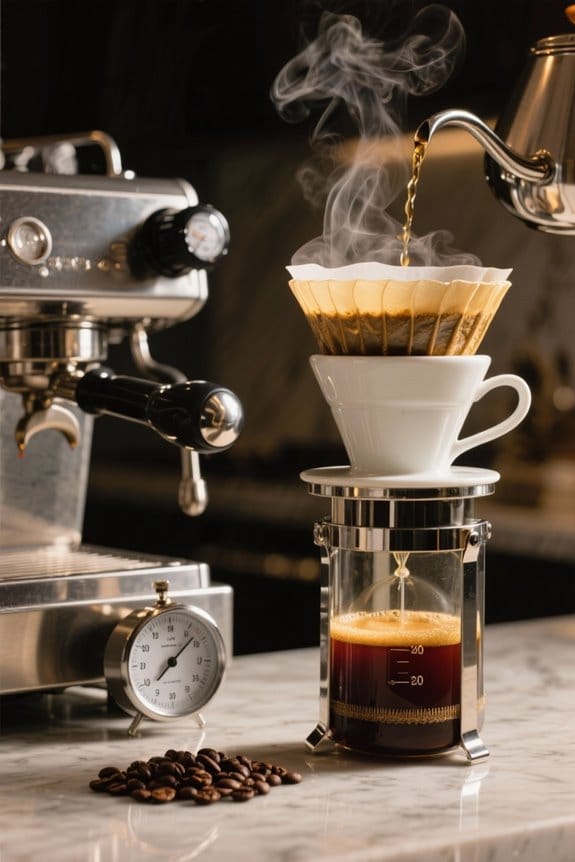
Brewing time considerably influences coffee flavor, particularly when aiming for perfect extraction. For peak flavor extraction, the recommended brewing times are 4-5 minutes for French Press and 2.5-3 minutes for Pour-Over methods. Insufficient brewing time can result in weak coffee, as it does not allow enough contact between water and coffee grounds, thereby limiting the extraction of essential flavors. Conversely, over-brewing leads to bitterness due to over-extraction, making it critical to adhere to specific guidelines. Following these recommended brewing times establishes a balanced cup. Additionally, taking the time to enjoy the aroma during the brewing process enhances the overall experience, emphasizing the value of patience in achieving exceptional coffee. Understanding various brewing methods can also improve your results by allowing you to select the best approach for your taste preferences.
Troubleshooting Common Weak Coffee Issues
Identifying the reasons behind weak coffee often involves examining various essential factors. A common cause is using insufficient coffee grounds; the ideal ratio is approximately 2 tablespoons of coffee for every 6 ounces of water. Additionally, brewing time plays a crucial role; for methods like French press, a steeping time of 4-5 minutes is recommended, whereas pour-over typically requires 2.5-3 minutes. The water temperature is equally important; it should be between 195°F and 205°F to guarantee proper extraction. Moreover, the grind size affects strength; a coarse grind may limit extraction, while a fine grind risks over-extraction. Finally, using stale or pre-ground coffee can severely impact flavor, emphasizing the need for freshness in coffee beans. To enhance your coffee experience, consider investing in a machine with programmability features that allows for precise control over brewing variables.
Enhancing Flavor Through Brewing Techniques
To enhance the flavor of coffee, attention must be paid to several key brewing techniques. A recommended coffee-to-water ratio is approximately 1:15 to 1:17, equating to about 2 tablespoons of grounds for every 6-8 ounces of water. This guarantees adequate strength and flavor. Additionally, adjusting grind size is vital; a coarser grind suits French press methods while a medium grind is ideal for pour-overs. Maintaining water temperature between 195°F and 205°F promotes peak extraction of coffee oils and acids. Cooler water results in weak, under-extracted cups. Finally, allowing sufficient brewing time is essential—4-5 minutes for French press and 2.5-3 minutes for pour-over methods—enabling full flavor development and enhancing the overall coffee experience. Experimenting with different coffee bean types can also significantly improve flavor profiles.
Additional Resources for Better Coffee Brewing
Improving coffee brewing skills can be greatly enhanced by utilizing a variety of resources available to enthusiasts at all levels. To brew an ideal cup, using the perfect coffee-to-water ratio is vital; aim for 1 gram of coffee per 15–17 grams of water, roughly 2 tablespoons for every 6–8 oz of water. The water should be hot enough, ideally between 195°F and 205°F, to avoid under-extraction. Additionally, experimenting with grind sizes can make a significant difference; for instance, a coarse grind is preferable for a French press, while a fine grind suits espresso. Understanding the appropriate brewing time, such as 4–5 minutes for the French press, guarantees stronger flavors, making a medium roast truly shine. Investing in digital coffee scales can further enhance precision in your measurements, ensuring consistency in your brewing process.
Frequently Asked Questions
Why Is My Coffee Not Tasting Good Anymore?
Coffee may taste subpar due to factors like aging beans, improper grind size, inadequate brewing methods, inconsistent water temperature, or poor storage. Ensuring bean freshness and ideal brewing techniques can greatly enhance flavor and enjoyment.
How to Fix Watery Tasting Coffee?
To remedy watery coffee, one must adjust the coffee ratio, ensuring strength aligns with desired taste. Experimenting with grind size, enhancing brewing time, and prioritizing water quality will yield noticeable taste adjustments, fostering a satisfying cup.
What to Do With Bad Tasting Coffee?
To improve bad tasting coffee, one can explore various coffee brewing techniques, enhancing flavor profiles through quality ingredients. Experimenting with coffee freshness and optimizing the brewing ratio may also lead to significant taste enhancement.
How to Make Stale Coffee Taste Better?
To elevate stale coffee’s taste, one might explore various brewing methods, add spice or milk alternatives, or even experiment with flavor enhancement techniques. Proper storage can also notably shift the overall experience, revitalizing its essence.