As an Amazon Associate, we earn from qualifying purchases. Some links on this site are affiliate links at no extra cost to you. Our recommendations are based on thorough research and editorial judgment.

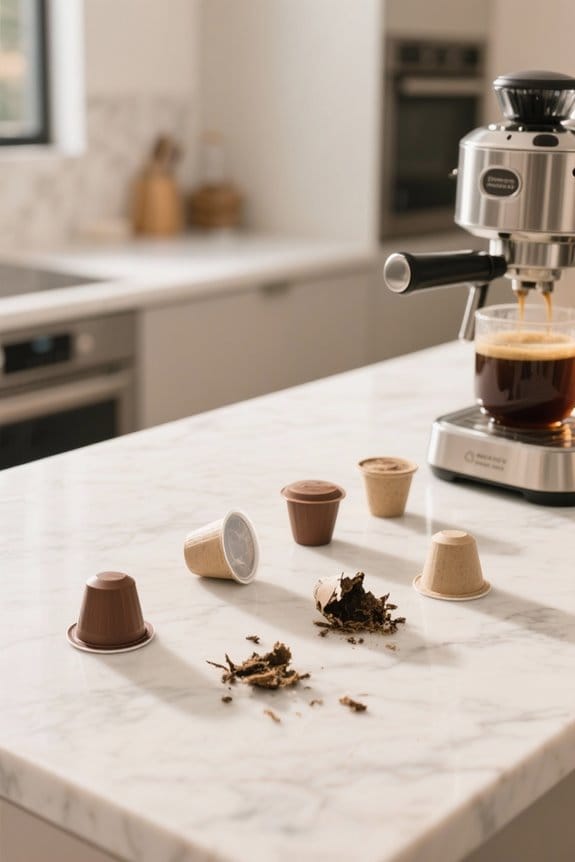
How Compostable Coffee Pods Break Down Over Time

Compostable coffee pods break down efficiently within industrial composting systems. Composed of over 85% coffee grounds, along with a paper lid and plant-based materials, these pods typically decompose within 38 to 46 days. Industrial conditions provide ideal temperatures and moisture levels, promoting effective microbial activity. In contrast, conventional plastic pods may take up to 500 years to degrade, contributing considerably to landfill waste. Understanding the breakdown process offers further insights into sustainable disposal practices.
Key Takeaways
- Compostable coffee pods decompose within approximately 38 days in industrial composting environments due to controlled conditions.
- In contrast, conventional plastic pods can take up to 500 years to break down in landfills.
- They are composed of over 85% biodegradable materials, primarily coffee grounds.
- Industrial composting optimizes temperature and microbial activity, enhancing the breakdown process.
- Proper waste management diverts compostable pods from landfills, preventing harmful microplastics in the environment.
The Composition of Compostable Coffee Pods
You may be interested



Compostable coffee pods consist mainly of over 85% coffee grounds, supplemented by a paper lid, a cornstarch filter, and a plant-based compostable ring crafted from coffee bean husks. These materials are specially designed to be biodegradable, breaking down without leaving behind harmful residues or microplastics. The coffee grounds, a significant component, contribute to the organic matter, enhancing the composting process. During this process, the components decompose into nutrient-rich compost, similar to other organic waste. Certified compostable by the Biodegradable Products Institute (BPI), these coffee pods meet stringent standards, allowing them to integrate quickly into industrial composting facilities. Typically, they decompose within about 46 days under ideal conditions, making them an eco-friendly option for coffee lovers. Additionally, the use of plant-based materials in these pods further supports sustainability efforts.
Recommended Products

Roasted with Precision: Our high-quality, bold E.S.E. coffee pods are intense and dynamic, with captivating notes of cocoa and dried fruit, finishing with a deep, full-bodied espresso experience.

Compatible with Nespresso Original Machines: Artizan Coffee organic capsules are specifically designed to work seamlessly with Nespresso Original brewers, including Delonghi C190, D290, Citiz, CitiZ & Milk, Maestria, U, Le Cube, Inissia, Lattissima Plus, Lattissima Pro, Lattissima Touch, Lattissima One, Grand Lattissima, Pixie, KitchenAid, Prodigio, Expert, Essenza Mini, Essenza Plus, Creatista Uno, Creatista Plus, and Creatista Pro

Classic Medium Roast - ( Packs) - Smooth & Balanced Flavor w Flavor - Enjoy a smooth, satisfying Senseo coffee with balanced aroma, rich taste, and a crema layer in every cup.
The Importance of Industrial Composting Conditions

Industrial composting is crucial for the effective breakdown of compostable coffee pods. These pods require specific conditions found in composting facilities, including controlled temperatures and moisture levels, to achieve degradation within approximately 46 days. Unlike home composting, which often lacks these critical conditions, industrial composting can reach higher temperatures and effectively manage oxygen, enhancing the decomposition process. Standards such as ASTM D6400 and EN 13432 define the criteria for compostability, ensuring materials break down without harmful residues. Without adequate industrial composting facilities, many compostable pods end up in landfills, leading to methane production instead of transforming into beneficial organic matter. For this reason, proper waste disposal through industrial composting is essential for achieving true compostability and environmental sustainability. Additionally, utilizing reusable K-Cups can significantly reduce waste associated with single-use pods, promoting a more sustainable coffee consumption habit.
Recommended Products

QUICK AND EASY: 96 Hawaiian Blend single serve, compostable, coffee pods. Cameron's Coffee strives to provide the convenience of a single serve pod with the quality of café brewed coffee.

QUICK AND EASY: Variety Pack of 4 boxes of 32 counts of Donut Shop, Breakfast Blend, 10% Hawaiian Blend, and Jamaican Blend single serve, compostable, coffee pods. Cameron's Coffee strives to provide the convenience of a single serve pod with the quality of café brewed coffee

QUICK AND EASY: 128 count of Breakfast Blend single serve, compostable, coffee pods. Cameron's Coffee strives to provide the convenience of a single serve pod with the quality of café brewed coffee.
Breakdown Process in Municipal vs. Backyard Composting
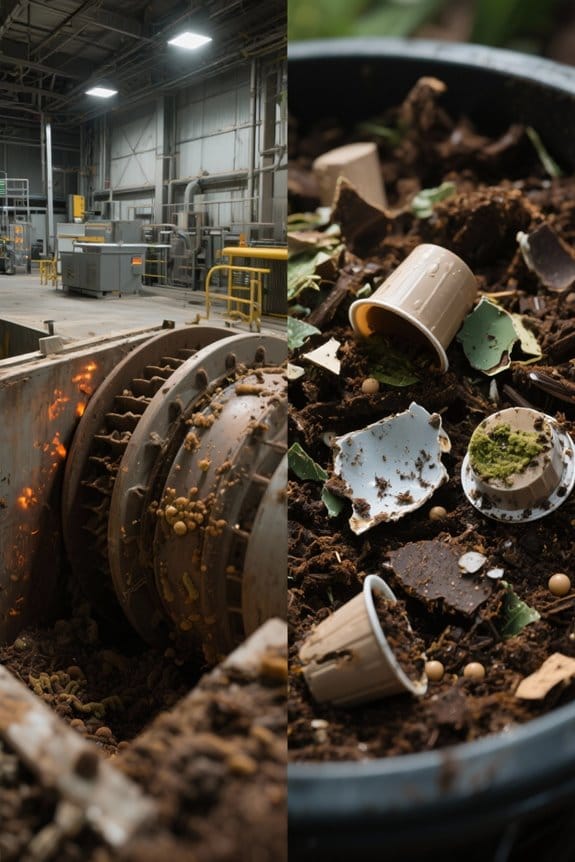
While many coffee drinkers may appreciate the convenience of single-use coffee pods, understanding the breakdown process in different composting environments is essential for promoting sustainable practices. In municipal composting, compostable pods typically break down within a few weeks to a few months due to controlled conditions that optimize temperature, moisture, and microbial activity. Studies show successful decomposition without contamination in facilities, sometimes completing the process in just 46 days. Conversely, backyard composting may result in a longer breakdown process, as varying temperature and moisture levels can delay decomposition. Inconsistent microbial activity further complicates this environment, leading compostable pods to take considerably longer to decompose into enriching organic matter, which benefits soil health. Additionally, incorporating reusable K-Cup filters can further enhance sustainability efforts by reducing reliance on single-use pods.
Recommended Products

Matching Planet + Compostable PLA Lid Sold Separatly on Amazon

Bright & Balanced Morning Roast – A smooth, medium-bodied blend crafted from Central American Arabica beans. Bright flavor and clean finish make it perfect for your daily wake-up cup.

Smooth, Full-Flavored Medium-Dark Roast – Organic Rainforest Blend offers a perfectly balanced taste with rich, smooth character—crafted from 100% Arabica beans grown in Central America.
Comparing Decomposition Rates: Compostable vs. Conventional Pods
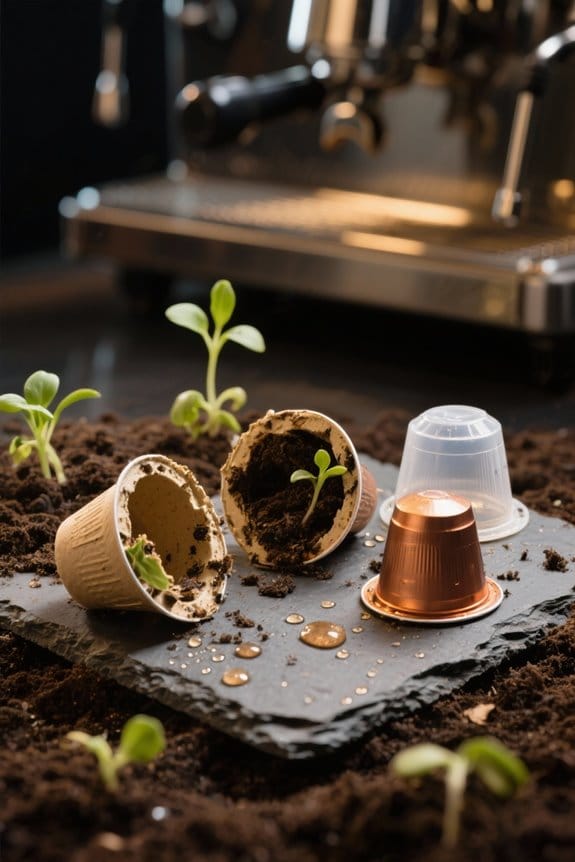
When examining the decomposition rates of coffee pods, notable differences emerge between compostable and conventional options. Compostable pods, primarily made from plant-based materials, decompose within 38 days in industrial composting environments. In contrast, conventional plastic coffee pods can take up to 500 years to break down in landfills. This significant disparity highlights the efficiency of compostable pods in waste management. Laboratory tests showed that they integrate rapidly, demonstrating effective degradation and leading to the formation of nutrient-rich soil, unlike conventional pods. Traditional plastic pods contribute over 400 million pounds of waste annually in the U.S., failing to return valuable nutrients to the earth upon disposal, emphasizing the urgent need for more sustainable choices in coffee consumption. Additionally, compostable K-Cups are generally not recyclable with standard plastics and should be disposed of through industrial composting facilities, ensuring proper disposal methods and maximizing environmental benefits.
Recommended Products
CERTIFIED COMPOSTABLE: These EcoSafe compostable trash bags/ garbage bin liners are BPI certified compostable and CMA approved for food waste disposal (BPI Cert #890992).
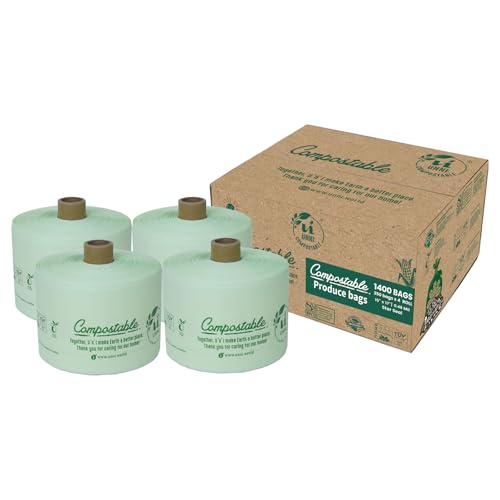
Specifications and Capacity: 350 bags per roll, 4 rolls per case; bag size: 15" x 17", thickness: 0.48 mil. Perfect for farmers markets, grocery stores, and sustainable fresh produce storage. Rooted in the heart of San Francisco, we strive to deliver solutions that support eco-friendly living and a sustainable future.

USDA Certified Organic Coffee - blended from 100% Arabica coffee beans
Environmental Impact of Compostable Coffee Pods
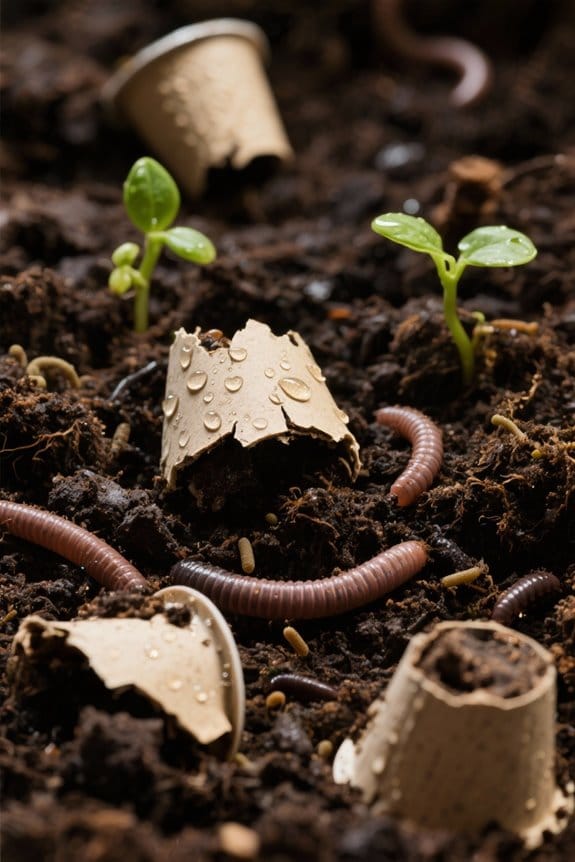
Compostable coffee pods represent a significant advancement in sustainable waste management systems. Unlike traditional plastic pods, which contribute to long-lasting coffee pod waste in landfills, these plant-based pods break down rapidly. Composed of over 85% biodegradable materials, compostable pods integrate into composting processes, achieving degradation within 38 days under ideal conditions. Their environmental impacts include significant reductions in greenhouse gases, as their decomposition transforms organic waste into nutrient-rich soil, enhancing soil health. Industrial composting facilities, equipped to manage higher degradation temperatures, support the effective breakdown of these pods. By diverting waste from landfills and minimizing harmful microplastics, compostable coffee pods present a promising option for environmentally conscious consumers seeking a recyclable, sustainable alternative to single-use plastics. Additionally, brands like San Francisco Bay Coffee emphasize eco-friendly practices, using compostable materials in their pods.
Best Practices for Proper Disposal of Compostable Pods
Proper disposal of compostable coffee pods is vital to guarantee their effective breakdown and minimize environmental impact. These pods should ideally be directed to industrial composting facilities, where specific conditions like high temperatures and active microbial life facilitate degradation within approximately 46 days. Home composting often lacks the necessary heat and aeration, leading to ineffective breakdown. It is important for consumers to check local disposal guidelines, as municipalities with systems for compostable pods can process this waste properly. To avoid contamination, users should verify pods are free from contaminants, as leftover coffee grounds can disrupt mixed waste streams. Additionally, engaging in Extended Producer Responsibility (EPR) programs can enhance the availability of suitable composting facilities for biodegradable products. Using reusable K-Cups can also significantly reduce reliance on single-use options, promoting a more sustainable coffee culture.
Recommended Products

Plastic and aluminum are recycled

The information below is per-pack only

ARABICA COFFEE – Chock Full o’Nuts single serve coffee cups are a rich blend of Arabica coffee beans that have been roasted to perfection. Each cup delivers a delicious flavor and the unmistakable aroma of Chock Full o’Nuts.
Frequently Asked Questions
How Long Does It Take for Compostable Coffee Pods to Break Down?
Compostable coffee pods typically decompose within 38 to 180 days, influenced by biodegradation factors such as temperature and moisture. Their compostability certification guarantees minimal environmental impact, promoting sustainable practices and enriching soil through responsible waste management.
How Long Do Compostable Plastic Cups Take to Decompose?
Like a whisper in the wind, compostable plastic cups decompose in 45 to 90 days within commercial composting facilities. Their environmental impact lessens through proper disposal methods and sustainable practices, unlike slower-breaking biodegradable products in landfills.
Are Compostable Cups Actually Compostable?
Compostable cups are indeed compostable, provided they meet biodegradability standards. Using compostable materials supports eco-friendly options, promotes coffee sustainability, facilitates waste reduction, and maximizes composting benefits, essential for enhancing consumer awareness regarding environmental impact.
How to Keep Compostable Coffee Pods Fresh?
In a world where freshness magically disappears, eco-friendly practices include proper pod packaging, adhering to expiration dates, using ideal brewing methods, and following composting tips—ensuring flavor preservation and reliable freshness indicators for sustainable sourcing and pod disposal.